Anarchism without anarchism: searching for progressive politics

Richard Falk, professor emeritus of international law at Princeton University and now 80, demonstrates it’s never too late in life to start a blog. In his latest post, he says “I wanted to introduce a perspective about progressive politics, and citizen engagement, at a time of fallen hopes.”

Recent explorations of the anarchist heritage are to be welcomed, bringing to a contemporary intellectual audience the politically and morally inspiring thought of such major thinkers as Bakunin, Kropotkin, Proudhon, and more recently, Harold Laski and Paul Goodman. This rich tradition reminds us strongly of the relevance of anti-state traditions of reflection and advocacy, as well as the indispensable role of cooperation, non-violence, community, small-scale social organization, and local solutions for human material needs if the aspiration for a just and sustainable society is ever to be rescued from its utopian greenhouse. There is every reason to celebrate this anarchist perspective for its own sake, although in a critical and discriminating manner. Non-violent philosophical anarchism has a surprising resonance in relation to the ongoing difficult search for a coherent and mobilizing progressive politics in the aftermath of the virtual demise of Marxist/Gramsci theorizing, as well as even socialist thought and practice.

At the same time, it should be acknowledged that this anarchist tradition has accumulated a heavy public burden of discrediting baggage, which adds to the difficulty of relying upon it to engender a new progressive mobilization within the current global setting. An immediate barrier to the wider acceptance of philosophical anarchism as a tradition of thought is its strong identification with exclusively Western societal experience, despite the existence of some affinities with strains of late Maoist praxis, especially the distrust of bureaucracies and political parties. In contrast, Gandhi’s inspiration and influence is often explicitly or implicitly evident in some recent attempts to espouse nonviolent anarchist perspectives as, for instance, in the Green Revolution that has been ongoing in Iran since their contested presidential elections of June 2009. Even within the Western framework of political thought and action there are two formidable obstacles to reliance on anarchism as political posture resulting from widespread public confusion and media manipulation.

First, is the widely endorsed stereotype of the anarchist as a sociopathetic bomb thrower, an understanding given credible cultural currency by way of Dostoyevski’s great anti-terrorist novel, The Devils. In our post-9/11 world it is unrealistic for public opinion to separate this dominant image of the anarchist from its preoccupation with terrorists and terrorism. To refer to someone as an anarchist invokes a discrediting term that is generally accepted as such without any qualifications. At best, ‘anarchists’ are popularly depicted as those seeking to turn peaceful demonstrations into violent carnivals of anti-state behavior, radical activists with no serious policy agenda. The mainstream media blamed anarchist elements for the violent disruptions that took place during the infamous ‘battle of Seattle’ at the end of 1999, which was the first massive populist expression of radical resistance to neoliberal globalization. In certain respects, by playing the anarchist card, the media and pro-globalizing forces were able to divert attention from the expanding populist resistance to non-accountable, non-transparent, anti-democratic, and hegemonic institutional actors (World Bank, IMF, and WTO). Most of those participating in Seattle neither regarded themselves as anarchists nor wanted to be portrayed as marching in step behind the black banners of anarchist militancy. The self-proclaimed anarchists at Seattle were also sharply criticized as ignorant about and indifferent toward the substantive anti-globalization concerns that motivated most of the demonstrators.

Secondly, our ideas about international relations often associated with Hobbes to the effect that relations among states are characterized by the absence of government, and in realist thinking that emanates from this source, the irrelevance of law and ethics to the pursuit of order and security on a global level.


Continue reading.

Facebooktwittermail

Maliki confirms US troops must leave Iraq by end of 2011

The Associated Press reports:

Prime Minister Nouri al-Maliki said Saturday that an agreement requiring U.S. troops to leave by the end of 2011 will stand because Iraqi forces are capable of taking care of the country’s security.

The comments are his first on the subject since being tasked with forming a new government after nearly nine months of political deadlock, and some of his strongest to date on what is expected to be a key issue facing the next government.

“The security agreement with what it included of dates and commitments will remain valid, and I do not feel the need for the presence of any other international forces to help Iraqis control the security situation,” al-Maliki told reporters during his first news conference since getting the formal request on Thursday to form the new government.

The Los Angeles Times reports on the renewed influence of Muqtada al Sadr.

In recent months, Maliki’s government has freed hundreds of controversial members of the Shiite Muslim cleric’s Mahdi Army and handed security positions to veteran commanders of the militia, which was blamed for some of the most disturbing violence in the country’s civil war and insurgency against U.S. forces.

The Mahdi Army has also in effect seized control of cellblocks at one of Iraq’s largest detention facilities, Taji prison. Within months of the U.S. hand-over of the prison in March, Mahdi Army detainees were giving orders to guards who were either loyal to or intimidated by them, Iraqi and U.S. officials say.

It marks a remarkable return to prominence for Sadr, an Iranian-backed Shiite cleric who stunned his followers in September when he delivered pivotal parliamentary votes to Maliki that helped him stay in power.

Senior Sadr supporters are being brought into the Interior Ministry at high-level positions, according to Mahdi Army members and Iraqi officers. One Sadr commander who is being given the rank of brigadier general said he knew of 50 others who were being recruited for officers’ positions.

The group has secured political gains also. Last week, the Sadr camp won the deputy speaker position in parliament, defeating Maliki’s candidate, and is said to be vying for the post of deputy prime minister too.

The Sadr movement’s prominence may make it harder for the United States to wield its waning influence in Iraq, including securing an agreement allowing it to keep forces in Iraq after the end of 2011, when the last U.S. troops are scheduled to leave.

Facebooktwittermail

Israel to build internment camp for African refugees

Al Jazeera reports that Israel’s cabinet has voted to create a detention center in the Negev desert to house thousands of illegal immigrants who arrive each year, mostly from Africa.

Israeli officials have not said how many migrants already in Israel would be sent to the facility, which is expected to be built at or near the site of a former prison camp for Palestinians.

“We aren’t jailing or distancing them,” [Eyal] Gabai [the director-general of Netanyahu’s office] said. “They can have a good time, eat and drink. Not everyone who arrives in Israel must be allowed to work here.”

“Coming up with an asylum and immigration policy may mean having to absorb tens of thousands of non-Jewish refugees, threatening the character of the Jewish state”

He said Israel was seeking to avoid “unreasonable action” such as deporting migrants, which could put their lives in danger.

“This is a huge issue here and one that is getting bigger month by month,” Al Jazeera’s Sherine Tadros, reporting from Jerusalem, said.

“On one hand, [Israel] can’t be sending refugees and asylum seekers back because of their legal obligations under international conventions.

“On the other hand, coming up with an asylum and immigration policy may mean having to absorb tens of thousands of these non-Jewish refugees, threatening the Jewish character of the state.”

Facebooktwittermail

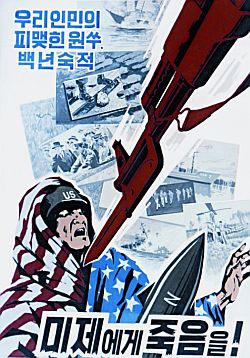
North Korea’s military-first paradigm

In a presentation to the World Affairs Council in San Francisco earlier this year, BR Myers spoke about the way North Koreans think of themselves and how their image of their own racial purity shapes their view of the world.

While Kim Il-sung’s legitimacy had rested on two pillars: economic success and military strength, Kim Jong-il’s legitimacy as a leader rests exclusively on military strength.

This country really has nothing else with which to inspire its people with pride than shows of military or nuclear strength… North Korea has enshrined the military-first principle in the constitution. It has deleted the word communism from the constitution, as well. So this regime is looking at this military-first paradigm for the long haul, in other words.
It’s not really important [who the next leader is]… because whoever takes over is going to be faced with this same quandary really, which is: how do we go from being a military-first country, to say, a economy-first country without losing all reason to exist as a separate state. And this is why it is so unrealistic for us to expect them to trade military strength for a mere aid deal.

Let’s say we increased their standard of living by 20% over the next five years, which would be an awful lot, that would not help King Jong-il politically because North Korea would still be hopelessly behind South Korea in economic aspects, and therefore, North Korea would have no reason to exist as a separate Korean state. All that it has now, its only source of legitimacy, is the claim that it alone is standing up to the Yankee enemy — the race enemy.

So to people who are optimistic about the six-party talks or the bilateral talks or whichever talks are supposed to take place, I ask the question: where does North Korea go, if it disarms? What does it do with itself? How does it justify its existence? And none of the optimists with whom I’ve talked to has been able to give me an answer. And they may not consider this a big problem, but we can be pretty sure that Kim Jong-il realizes how big a problem it is, and this is why I am so pessimistic for the prospects for arms talks. Because you can talk a regime into doing a lot of things, but one thing you can’t make it do is commit political suicide. And this is where the left wing and the right wing and the center in America are all wrong about North Korea. The left wing is wrong because you cannot bribe or sweet talk a country into committing political suicide. The right wing is wrong because you can’t bully it into doing that either. The center is wrong for thinking that you can get the Chinese to persuade them to do it.

Facebooktwittermail

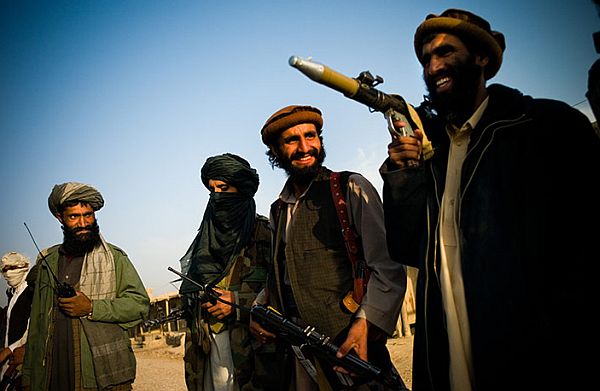
How to talk to the Taliban

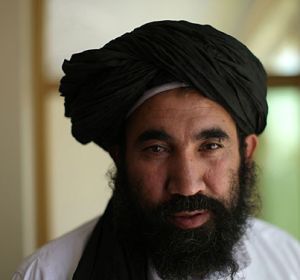
The intrepid Ghaith Abdul-Ahad, in his most recent series of reports from Afghanistan, describes his meeting with Abdul Salam Zaeef, the former Taliban ambassador to Pakistan, who spent three years from 2002 in Guantánamo and who, until July this year, was on the UN list of known terrorists.

Zaeef is now a prolific writer and speaks five languages fluently. According to many Taliban insiders, if there are any negotiations between the Taliban and the Americans they will go through him.

“The Americans came and sat here,” he said, pointing at one of the big sofas. “They said they needed to talk to the Taliban but couldn’t find them. They didn’t know who the Taliban were. I said go and look, they are everywhere, the Taliban have shadow governors and administrators, why don’t you go and talk to them?”

The real reason the Americans didn’t talk, he said, was that they had no respect for the Taliban.

“I told the Americans to respect their enemy. You can’t negotiate with the Taliban from a position of strength, so why would the Taliban come and talk to you? If you want talks you have to treat the Taliban as equals.”

In any negotiation, the Taliban would assert that as long as their land was under occupation they would struggle to liberate it.

They would continue to fight until the foreigners left. Their argument was with the Americans, not the Afghan government. They did not want to bring down the government, they just wanted to renew it.

“The Taliban have no problem with the Afghan government. We have no problem with Karzai or the Afghans. The problem lies with the Americans,” he said.

“Why would we negotiate with Karzai if he has no say in running his government? They are under occupation and all orders come from foreigners.”

The Americans, he said, had not talked to any senior Taliban to his knowledge. However, “the government and the Taliban have been talking for two years on local matters, health-related issues, prisoner exchange, education.

“This is not a negotiation, this is a way to help and benefit our Afghan people and nation. Negotiations haven’t started yet.”

The Americans had a right to know that Afghanistan would not be used as a base for attacks against them, he said, but that was all.

“The Americans have one right only, and that is their right to be assured that Afghanistan will not be used against them and that is something the Taliban should give.

“Apart from that they have no rights, they have no right to tell us about democracy and human rights. That’s an Afghan issue and it will be decided by the Afghans.

“The Americans behave with arrogance and if they don’t want to be defeated in Afghanistan they should talk.

“They don’t belong here,” he said. “They are foreigners, outsiders.”

Meanwhile, The Guardian contradicts earlier reports which had claimed that British intelligence had been responsible for engaging an impostor negotiator.

Peace talks conducted with an impostor who posed as a Taliban leader, and which led to a meeting with Hamid Karzai in Kabul and thousands of dollars in “goodwill payments”, were started by the Afghan government and approved by the former American commander, Stanley McChrystal, the Guardian has learned.

This account sharply contradicts claims made by the Afghan presidency, which has put the entire blame on Britain, apparently supported privately by US officials.

Facebooktwittermail

America the material

At truthdig, Nomi Prins reviews A Question of Values, by Morris Berman:

A Question of Values is an alternately sobering and inspiring collection of essays by noted historian and cultural critic Morris Berman. Berman pulls no punches in laying bare the truths about who we are, not just as a nation, but also as individuals wrapped up in the destructive pursuit of material excess. In the unswerving style of his other writings, he rips apart the national illusion of greatness.

The book is divided into four sections: “Lament for America,” “Mind and Body,” “Progress True and False” and “Quo Vadis?” (Where are you going?). Each part examines the American identity from a historical, spiritual, technological and alternative future perspective, respectively. Taken together, they ask the imperative questions: How did we get to this point, and how do we get out? Or will we? (Here being a country caught in a societal malaise of promoting external accumulation over internal compassion.) Taken together, the sections inspect our inner and outer fabric as a nation.

In Section I, the second essay, “Conspiracy vs. Conspiracy in American History,” Berman dissects America’s profound sense of self-importance, a central theme of the entire collection. He discusses how the “post-election euphoria in the United States over Barack Obama was nothing more than a bubble, an illusion, because the lion’s share of the $750 million he collected in campaign contributions” came from Wall Street. Thus, the fact that Obama proceeded to promise to rein in Wall Street’s excesses lay in stark and rather public contrast to his own connections with the banks.

This political sleight of hand is part of a larger problem for which Berman lists four descriptive conspiracies (or fallacies): First, that we are a chosen people (so we get to do whatever we want); second, that America itself is a kind of religion; third, that we must endlessly expand, whether it be geographically or financially; and, lastly, that our national character is composed of extreme individuals going back to our colonization. This he considers to be the main reason why “American history can be seen as the story of a nation consistently choosing individual solutions over collective ones.”

Facebooktwittermail

Nature doesn’t do bailouts

Johann Hari writes:

Why are the world’s governments bothering? Why are they jetting to Cancun next week to discuss what to do now about global warming? The vogue has passed. The fad has faded. Global warming is yesterday’s apocalypse. Didn’t somebody leak an email that showed it was all made up? Doesn’t it sometimes snow in the winter? Didn’t Al Gore get fat, or something?

Alas, the biosphere doesn’t read Vogue. Nobody thought to tell it that global warming is so 2007. All it knows is three facts. 2010 is globally the hottest year since records began. 2010 is the year humanity’s emissions of planet-warming gases reached its highest level ever. And exactly as the climate scientists predicted, we are seeing a rapid increase in catastrophic weather events, from the choking of Moscow by gigantic unprecedented forest fires to the drowning of one quarter of Pakistan.

Before the Great Crash of 2008, the people who warned about the injection of huge destabilizing risk into our financial system seemed like arcane, anal bores. Now we all sit in the rubble and wish we had listened. The great ecological crash will be worse, because nature doesn’t do bailouts.

Facebooktwittermail

Obama’s national security state

Michael Ratner, president of the Center for Constitutional Rights (CCR) and adjunct professor of law at Columbia University Law School, interviewed by International Socialist Revew:

ISR: Let’s start with the Obama administration’s policies on habeas corpus and on torture. As a presidential candidate, Obama said he would close Guantánamo, said he believed in habeas corpus rights, and was critical of President Bush. What’s been his practice since he came to office?

Michael Ratner: My office, CCR, is one of the legal groups that represents many of the Guantánamo detainees and brings these writs of habeas corpus. That is a fancy way of saying, “Let’s go to court, and see if there’s any evidence to hold the person.” The expectations of the team of lawyers representing the detainees was very high that Guantánamo would actually close, that Obama would do it. There were probably a little over 300 people in Guantánamo when he took office. It’s down to maybe 200-some now. But we expected better—and now it may go on for years. We really thought that Obama wouldn’t fight us in court on the rights of the detainees, that he would get the detainees either to another country or he would charge and try them. And of course, it hasn’t worked out that way at all, and it’s a deep disappointment. In fact a lot of the habeas lawyers signed a letter supporting Obama saying his election would actually be good for our clients. Obama’s effort to close it seemingly got off to a somewhat quick start. Obama, within two days of being in office, signed an executive order, which is essentially a presidential order, which said that Guantánamo would be closed in a year. Of course, as we speak now, it’s more than a year and a half after that order, and it is not near closed. Obama’s commitment has been abandoned. And he made a number of other promises that have not been met about secret detention sites, military commissions, and the like.

Obama has put new clothes on the Bush doctrine toward “enemy combatants,” but the underlying lawlessness of the doctrine is the same. In particular, imagine this: you go to court on behalf of someone in Guantánamo, and the judge has to decide whether there is sufficient evidence to hold him. What Bush said was they can be held as “enemy combatants,” and he gave the term a vague definition, such as that the person was hostile to the United States or picked up arms against the United States or belonged to a group that was hostile to the United States. If there was “evidence” those detainees could be held in prison indefinitely, essentially a form of preventive detention. We had hoped Obama would get rid of that entire preventive detention scheme. CCR’s view is there should not be a preventive detention scheme—it’s illegal and immoral. What you must do, and what is legally necessary, is to charge someone with a crime, and hold them only if they’re convicted. The rule is simple: charge and try people with crimes, or release them. There are not any other valid legal choices.

I considered this preventive detention scheme to be one of the worst hallmarks of the Bush administration. Sadly, this intolerable preventive detention scheme has continued, and you could say continued with a vengeance, under Obama.

Facebooktwittermail

The misunderestimation of Sarah Palin

In The Nation, Melissa Harris-Perry writes:

I assigned Sarah Palin’s Going Rogue in my course on women in contemporary US media and politics. I spent the week walking around town, riding the train and dashing through airports with the book tucked under my arm. “Isn’t she awesome?” gushed a waitress in a New Jersey restaurant. My seatmate on a flight to Louisiana smiled knowingly and whipped out her copy of Decision Points. On my way to California a guy in a University of Alaska sweatshirt nearly threw himself across the aisle to chat with me. It was a camaraderie with perfect strangers that I once evoked by wearing my Obama sweatshirt.

I expected my Princeton students—mostly young women, self-identified as liberal and feminist and actively engaged in local and national politics—to be critical of Palin. But although they found her authorial voice irritatingly self-assured and disagreed with her policy conclusions, they also found her surprisingly compelling. They thoughtfully drew parallels between her nontraditional (dare I say mavericky?) career choices and those of Hillary Clinton, whose Living History we read the same week.

I pushed my personal Palin test one step further by watching Sarah Palin’s Alaska with my 8-year-old daughter. My kid’s dislike of Palin is pure, instinctive and content-free. It’s not as though she has well-formed policy positions; she just knows that Palin was an opponent to be vanquished. Born in Hyde Park, my daughter learned to read “Obama” as her first word, because it was plastered on signs all over our neighborhood in 2004. My kid accompanied me to campaign events throughout 2008 and has heard many kitchen table commentaries railing against Palin and the Tea Party. But twenty minutes into the first episode, she was transfixed. She loved watching the baby bears. She was jealous that Palin had a studio in her house: “Mom, can’t you get one from MSNBC?” She cracked up with hand-clapping hysteria as the mountain-scaling Palin shouted, “I was never a gymnast or a cheerleader!” At the end my kid declared, “I know we don’t agree with her, but her life sure is interesting.”

Andrew Sullivan believes America won’t buy Palinism and in response to her Facebook mockery of Obama gaffes says: “A simple respect for the office she seeks would not reflect itself in these increasingly callow, sarcastic, cheap jibes at a sitting president.”

Really? Whoever is Obama’s opponent in 2012, I doubt they’ll refrain from taking cheap jibes at this president.

The “misunderstimation” of Palin has, I suspect, much more to do with the fact that those who view her with contempt have a hard time accepting the idea that they live in a country where she could be popular.

Facebooktwittermail

Crisis on the Korean peninsula or business as usual?

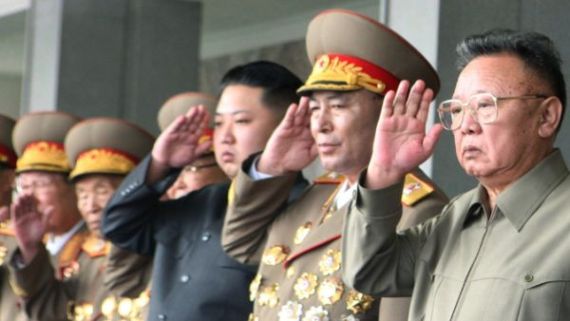
Vice Marshal Ri Yong Ho flanked by Kim Jong Un and Kim Jong Il

Steven Borowiec writes:

South Korean officials promised “enormous retaliation” if more North Korean attacks follow the shelling Tuesday of tiny Yeonpyeong island. For more than one reason, they can be glad that hasn’t happened.

To match the North’s aggression would cause a destructive conflict; to do nothing is to appear weak. A taxi driver in Seoul told me North Korea would never have attacked if the South still had a strong leader, like one-time military dictator Park Chung-hee. The driver said policies of engagement with the North had made the South into a pushover, a country that can be attacked without fear of serious retaliation. Nowadays, it seems everyone has a theory on how to handle North Korea.

Regardless, some things are fairly clear. To justify its military-first regime, North Korea always needs fresh evidence that the outside world wishes ill on the country. Its leaders need to present some acceptable reason why so many North Koreans are starving.

According to North Korea expert Brian Myers, “If the U.S. and South Korea cannot do anything for fear of Seoul coming under attack, and are foolish enough to make this line of reasoning public, then a future ‘provocation’ is merely a matter of time.”

Twenty-something Kim Jong Un is expected to take over leadership from his aging father soon, but the training wheels aren’t off yet. Some consider the North Korean attack a kind of practice for the young Kim, a way to demonstrate experience in dealing with conflict.

Myers plays down that angle: “I don’t like the current Western journalist habit of attributing NK’s every show of belligerence to the succession dynamic. It implies that things will change in the future once Kim Jong Un is settled in. I don’t consider that likely; when you are a military-first state you have to keep flexing your muscles on the world stage.”

The succession narrative invests too much significance in personality politics: the idea that a kind of rite of passage is playing out through which Kim Jong Un can demonstrate his capacity to be invested with the authority now possessed by his father. Yet as with all authoritarian regimes, the power of the state resides in the institution of the regime and the overriding interest of that institution is in its own continuity. Dynastic succession has less to do with a transfer of power than it has with maintaining the status quo.

The Sydney Morning Herald adds:

Behind North Korea’s cartoon dictator, handful of semi-functional nuclear weapons and threats of ”merciless” retaliation there is a desperate and exhausted nation that can barely concentrate beyond the next meal.

If there is any cause for reassurance after this week’s deadly attack on South Korean civilians and revelations that North Korea has a second nuclear program, it is that Kim Jong-il and his generals may be dangerous but there is little evidence they are collectively mad.

”Do you think the North Korean military is stupid enough to have a war with America?” says Park Syung-je, of the Asia Strategy Institute in Seoul. ”Do you think his son and others want suicide? I don’t think that is possible.”

North Korea has the world’s second-largest army with more than a million soldiers and nearly 5 million reservists, despite its population shrinking to just 23 million people after two decades of famine and malnutrition. But even within this privileged military strata soldiers are physically stunted, equipment is not maintained and even bullets are in short supply.

Facebooktwittermail

Cyber-con

In the London Review of Books, James Harkin writes:

Does Twitter have the power that is claimed for it? Some evidence from the contested Iranian election is presented in Death to the Dictator!, the first book-length account of the activist movement’s rise and fall. The book claims to be the work of an Iranian journalist writing under a pseudonym, and it mostly describes the experience of an (also pseudonymous) young man from Tehran who is swept up in the excitement and then arrested and tortured by the Basij militia. What starts out as a campaign alleging electoral fraud in support of a defeated politician quickly spirals into something more interesting: a chaotic uprising against the clerics and the Revolutionary Guards which, had it continued to spread and gather momentum, might have threatened the foundations of the Islamic Republic. Social media, however, play a minor role in Afsaneh Moqadam’s story, and an ambiguous one. At first the protesters are happy to use their mobiles to let each other know about upcoming rallies, and to share images of the demonstrations on YouTube. Soon, however, they grow wary of the rush of information. ‘Cellphone cameras, Facebook, Twitter, the satellite stations,’ the anonymous narrator complains: ‘The media are supposed to reflect what is going on, but they seem, in fact, to be making everything happen much faster. There’s no time to argue what it all means.’ Many come to believe that Western mobile phone companies have supplied the Iranian government with software to enable them to eavesdrop on their conversations. Some even fear that their mobiles have become bugging devices.

Before long the protagonist is urging his fellow activists not to bring their mobiles on demonstrations – if they lose them or drop them, they will be traced back to their owners. On one of the later demos, he notices someone surreptitiously taking pictures of himself and his fellow demonstrators on his mobile phone. Then he sees a photo of himself on a pro-government website that is soliciting help in identifying the troublemakers – a novel application of what internet gurus call ‘crowdsourcing’. It’s only after the crackdown on 20 June that the protesters retreat to their apartments to spend hours on the internet, sharing anti-filtering software and searching for scraps of news on Facebook, YouTube and reformist websites. And it’s now that the authorities clamp down hard: the internet is often blocked or so slow that it almost comes to a halt and the mobile network is often switched off, making it impossible to send texts. When service is finally restored, one semi-serious suggestion passed around among the activists is that they abandon the entire medium: ‘Boycott SMSs! That will cost the telecoms a packet!’

If Death to the Dictator! has little time for Twitter, that’s hardly surprising. When you look at the figures you realise that only a very small number of Iranians were using it. In 2009, according to a firm called Sysomos which analyses social media, there were 19,235 Twitter accounts in Iran – 0.03 per cent of the population. Researchers at al-Jazeera found only 60 Twitter accounts active in Tehran at the time of the demonstrations, which fell to six after the crackdown. There’s certainly a growing internet culture in Iran – in Blogistan, the media academics Annabelle Sreberny and Gholam Khiabany estimate that there are about 70,000 active blogs in the country, including a vibrant gay blogosphere – but it’s far from being the preserve of liberal reformists. Ahmadinejad’s supporters used Facebook and Twitter to spread his campaign messages while, on the other side, someone set up a Facebook group called ‘I bet I can find 1 million people who dislike Ahmadinejad’ (it had attracted 26,000 followers by April 2010). There’s little evidence, however, that any of this internet activity fuelled the street demonstrations; most were organised by word of mouth and text messages sent to friends. But the internet helped protesters bypass the state media and, for the few information-hungry Iranians who had it, Twitter allowed news to be sent out of the country when the authorities were blocking the mobile network. Even here, however, the global solidarity it bought for their cause might well have distracted them from the real work of reaching out to their fellow citizens.

It was more useful for the global media. ‘Twitter functioned mainly as a huge echo chamber of solidarity messages from global voices, that simply slowed the general speed of traffic,’ the authors of Blogistan conclude. On 16 June the authorities forbade journalists from covering the demonstrations without permission. Kicking their heels in their hotel rooms, most foreign correspondents began surfing through the blizzard of tweets and video clips to try and work out what was going on. But it was all difficult to verify, and a good part was tweeted from outside the country: to add to the chaos, many overseas sympathisers had changed their location to make it look as if they were in Iran. The point – perhaps – was to confuse the Iranian authorities by opening the information gates, but the flood of unverifiable tweets may have confused the protesters too. Some of what was sent around on Twitter – the news, for example, that Mousavi had been arrested – simply wasn’t true, so the movement’s high-profile foreign supporters were often retweeting rumour and disinformation from the comfort of their desktops. ‘Here, there is lots of buzz,’ the owner of a US-based activist site told the Washington Post. ‘But once you look … you see most of it is Americans tweeting among themselves.’

Facebooktwittermail

Iran tests its checks and balances

Jamsheed K. Choksy writes:

Casual Iran observers tend to portray the country’s most prominent political division as that between fundamentalist hard-liners and secular moderates. In reality, however, the struggle for Iran’s future is a three-way fight waged by the different branches of conservatives that control the parliament, the presidency, and the theocracy. The Green Movement may have stalled, but the parliamentary opposition to President Mahmoud Ahmadinejad has only grown stronger and more assertive over the past year — culminating in a recent push to charge the president with abuses of power warranting impeachment. Those efforts are coming to a halt under orders from Supreme Leader Ali Khamenei, who fears that the parliament’s attempt to assert itself against the president will also be at the expense of his own power base, the country’s conservative mullahs.

In fact, this isn’t the first round of infighting among Iran’s leaders. In July 2009, legislators warned Ahmadinejad that they would seek to oust him as the chief executive if he continued acting in an autocratic manner. Ahmadinejad responded by claiming the executive branch is the most important one of the government.

Ahmadinejad has also clashed with parliamentarians over his prerogative to influence the activities of the Central Bank. As financial hardships mount on common Iranians, in part due to mismanagement and in part from international sanctions, their elected representatives are blaming the president and his bureaucrats for the economy’s woes.

It’s a naked power struggle that has cloaked itself in ideology.

Facebooktwittermail

Israeli forces demolish mosque in a wave of West Bank demolitions

Joseph Dana reports:

Israeli forces demolished Palestinian homes in the Jordan Valley and the South Hebron Hills today in what seems as a wave of demolitions following yesterday’s demolitions all across the West Bank. Non-violent leaders from Beit Ummar have also been arrested in night raids. Grassroots organizers Mousa and Yousef Abu Maria were arrested from their homes as harassment continues in Beit Ummar

After carrying demolitions in the villages of Qarawat Bani Hassan near Salfeet, al-Jiftlik in the Jordan Valley and Hizma near Jerusalem yesterday, Israeli bulldozers returned to the Jordan Valley today. At 6:30 this morning, Israeli Civil Administration bulldozers accompanied by soldiers and armored military jeeps entered the Jordan Valley village of Khirbet Yarza, east of Tubas, and demolished the village’s mosque, a houses and four animal shelters. The demolitions rendered eleven people homeless.

Demolitions continued later in the morning in the South Hebron Hills village of al-Rifayaia, east of Yatta, where at 8:15 AM Israeli forces demolished a 250 meter house. The house was home to two families of twenty people, 16 of them minors.

Facebooktwittermail

“We will be with you until you are bankrupt and your economy collapses”

Daveed Gartenstein-Ross writes:

[In a March 2010 video, al Qaeda spokesman Adam] Gadahn put his finger on an important insight that AQAP [Al Qaeda in the Arabian Peninsula] is now reiterating: Even failed attacks can help the jihadists by “bring[ing] major cities to a halt, cost[ing] the enemy billions, and send[ing] his corporations into bankruptcy.” Failed attacks, simply put, can themselves be successes. This is precisely why AQAP devoted an entire issue of Inspire to celebrating terror attempts that killed nobody.

A message making this point at length was posted to the Al-Fallujah Islamic forums in December 2009. The author mockingly addressed the security services monitoring the website, asking them to write the following in their reports:

A Very Serious Threat

Source: A Radical Islamist Forum

Warn them that they must protect every federal building and skyscraper, such as: Library Tower (California), Sears Tower (Chicago), Plaza Bank (Washington State), the Empire State Building (New York), suspension bridges in New York, and the financial district in New York.

Nightclubs frequented by Americans and the British in Thailand, Philippines, Indonesia (especially our dear Bali Island), the oil company owned by the former Secretary of State Henry Kissinger in Sumatra (Indonesia), and US ships and oil tankers in the Strait of Hormuz, Gibraltar, and the Port of Singapore.

Let us not forget any airport, seaport, or stadium. Tell them to protect [these places] no matter the cost, day and night, around the clock.

The point is clear: Security is expensive, and driving up costs is one way jihadists can wear down Western economies. The writer encourages the United States “not to spare millions of dollars to protect these targets” by increasing the number of guards, searching all who enter those places, and even preventing flying objects from approaching the targets. “Tell them that the life of the American citizen is in danger and that his life is more significant than billions of dollars,” he wrote. “Hand in hand, we will be with you until you are bankrupt and your economy collapses.”

Unfortunately, the author, and the editors of Inspire, are all too right: The economics of this fight favor the terrorists, not those seeking to defend against terrorism.

Facebooktwittermail

America’s obsession with The Man

The American geopolitical prism is distorted in multiple ways, but none is more consistently evident than the strange idea that the actions of a nation can be understood simply by deciphering the thoughts and intentions of one man — even if we’re not always sure who The Man really is.

Iran — Ahmadinejad or Khamenei? North Korea — Kim Jong-il. Russia — Putin. Turkey — Erdogan. Syria — Bashar al-Assad. Egypt — Hosni Mubarak. Iraq — Saddam. Brazil — Lula. Venezuala — Chavez. Cuba — Castro. North Vietnam — Ho Chi Minh. South Africa — Mandela. Britain — Churchill. Germany — Hitler. Soviet Union — Stalin. China — Mao, Hu or who?

Reduce a nation to a single man and the task of understanding that nation’s cultural and political complexity will often be reduced to a question about how we deal with The Man.

Can he be trusted? Can he be befriended? Can he be bribed? Should he be kept at a distance? Does he need to be contained? Must he be killed?

For a few months in Afghanistan recently, Mullah Akhtar Muhammad Mansour became The Man — a representative of the Taliban offering the US a ticket home. That man turned out to be an impostor, while the word is that the man with one eye and his fellow commanders have no interest in laying down their weapons:

Sayed Amir Muhammad Agha, a onetime Taliban commander who says he has left the Taliban but who acted as a go-between with the movement in the past, said in an interview that he did not know the tale of the impostor.

But he said the Taliban leadership had given no indications of a willingness to enter talks.

“Someone like me could come forward and say, ‘I am a Talib and a powerful person,’ ” he said. “But I can tell you, nothing is going on.”

“Whenever I talk to the Taliban, they never accept peace and they want to keep on fighting,” he said. “They are not tired.”

Where does this obsession with The Man come from? Faith in personal salvation through Jesus Christ? The institution of the regal American presidency? The religion of individualism?

Whatever its origin, it skews America’s relations with the world — a world in which individuals, even those regarded as the authors of history, both shape and mirror the societies, cultures and historical junctures within which they operate. It is that which they mirror, to which we give far too little account.

Facebooktwittermail

Impostor claiming to be Taliban leader was key to meetings coalition touted as mark of progress

The Wall Street Journal reports:

The revelation that an impostor passed himself off as a Taliban leader in Afghan peace talks called into question coalition reports of progress in the war, and illustrated how little the allies know of the insurgency’s top leaders and the difficulty that lack of knowledge presents for U.S. strategy.

The man, who claimed to be one of the highest-ranking members of the Taliban, held at least two meetings with Afghan President Hamid Karzai and other officials in recent months, officials said.

Senior coalition officers—U.S. Gen. David Petraeus, chief of coalition forces, foremost among them—had sought to portray the nascent peace talks as a sign that the one-two punch of American forces clearing territory and Special Operations forces targeting insurgent field commanders was wearing down the Taliban and pushing them to the negotiating table.

Those claims are now in question. Many Western officials have concluded that the peace process is making little progress and the Taliban are ready to fight on.

Facebooktwittermail