Author Archives: Paul Woodward

Bill Maher’s fear of Muslims

Upon learning that in the UK last year, Mohammed (including its variant spellings) was the most popular name for baby boys, this was the reaction of comedian Bill Maher:

Am I a racist to feel alarmed by that? Because I am. And it’s not because of the race, it’s because of the religion. I don’t have to apologize, do I, for not wanting the Western world to be taken over by Islam in 300 years?

Maybe Maher thinks that as an expression of cultural integration Muslim parents in Britain should be naming their boys after English football stars like Wayne Rooney or David Beckham (and I dare say some do) but he should hardly be surprised that the name of the Prophet remains a favorite. The racist thought that he dared not utter but surely thought was this: at the rate they’re reproducing, it’s just a matter of time before the Muslims take over.

But Bill Maher — like Pastor Terry Jones — thinks the way to avoid being branded a racist when it comes to expressing ones Islamophobia is to suggest that you have nothing against Muslims, you just don’t like their religion. Thus Maher doesn’t express concern about the size of Britain’s Muslim population — simply the way they are choosing to name their babies.

Maher’s parochiality is most evident however, not simply in the focus of his alarm but because of the context he places it in: the condition of the Western world 300 years from now.

If 300 years ago any of the leading figures of the Enlightenment could have been given a glimpse of the West as it is now, I doubt that any would have felt reassured that Western Civilization had been preserved — least of all when they saw the jokers who have assumed the role of its defenders.

If 300 years hence, civilization exists in any form, humanity will have advanced in ways hard to anticipate. On its current trajectory, the West and the rest of the world is heading in a direction where the names parents choose for their babies should be the least of our concerns.

As for how that parenting task is being engaged now in America, what is striking about the popular choices is not so much the cultural sources of the names as the difference between genders: Old Testament and/or grandiose names for boys and mostly secular names for girls — Jacob, Isabella, Ethan, Emma, Michael, Olivia, Alexander, Sophia, William, Ava, Joshua, Emily, Daniel, Madison, Jayden, Abigail, Noah, Chloe, Anthony, Mia.

I don’t imagine that Bill Maher will be too concerned that among these 2009 top ten names for boys and girls not one of them is a New Testament Christian name, but it’s certainly curious that in a country whose population so strongly identify themselves as Christian, the apostles, their disciples and other prominent figures from Christian scripture have apparently gone out of style. Don’t blame the Muslims.

But here’s what will come as the biggest shock to the Islamophobes: the most popular name for girls in Iran in 2009 turns out to be Maryam — the Arabic and Farsi equivalent of Mary, mother of Jesus. What do you make of that, Bill?


Facebooktwittermail

Broder and Israel’s Goldilocks war against Iran

What kind of institutional entity do the hacks in Washington constitute such that they can have a “dean”?

When David Broder is referred to as the dean of the Washington press corps, I guess it’s just a complimentary way of saying the old guy. But Broder’s nine years younger than Helen Thomas. How come she never rose to the same stature? Is baldness a requirement?

In spite of his institutional stature, Broder’s mental capacities have in recent years come into question and his op-ed in the Washington Post on Sunday provides yet another occasion to wonder what is going on inside this man’s brain as he pushes for war against Iran.

He writes:

War and peace influence the economy.

Look back at FDR and the Great Depression. What finally resolved that economic crisis? World War II.

Here is where Obama is likely to prevail. With strong Republican support in Congress for challenging Iran’s ambition to become a nuclear power, he can spend much of 2011 and 2012 orchestrating a showdown with the mullahs. This will help him politically because the opposition party will be urging him on. And as tensions rise and we accelerate preparations for war, the economy will improve.

I am not suggesting, of course, that the president incite a war to get reelected. But the nation will rally around Obama because Iran is the greatest threat to the world in the young century. If he can confront this threat and contain Iran’s nuclear ambitions, he will have made the world safer and may be regarded as one of the most successful presidents in history.

So another war is going to rescue the economy? But just a minute — if war’s such an excellent economic tonic, how come we aren’t already in great shape? A decade of war just hasn’t been quite enough?

It’s easy to mock Broder’s prescription and even to wonder whether he’s lost his grip on reality, but maybe he’s not quite as crazy as he sounds. Read more carefully, this is not actually a call for war — it is a call for the continuously escalating threat of war.

This is indeed the most likely “lesson” that some have drawn from the experience of Iraq: that the best kind of war is the one that has yet to be fought. A war that can be budgeted for, equipped for, and around which politicians can construct their postures of strength, resolution and righteousness. The context is one in which we have been encouraged to think that war is normal. War is in fact so normal that Washington pundits can now present it as a useful economic tool.

Washington’s lead comes from Israel, which has less interest in starting a war with Iran than in promoting the idea that war might be just over the horizon — a kind of Goldilocks war, not too far away and not too close, but just close enough. In this delicately modulated threat of mayhem, Iran itself remains politically and economically boxed in, while issues which merit more urgent attention — namely the intractable Israeli-Palestinian conflict — can be shunted to one side.

Two countries so heavily invested in manufacturing the means for engaging in war, actually have less interest in wars being fought than in a war-footing constantly being maintained. The problem is, a war posture can only be maintained for so long and momentum only be built up so much before a turning point is reached: war either then becomes inevitable or a real alternative has to be pursued.

Only through the hubris which metastasizes inside the brains of those trapped inside the Washington bubble, can anyone fail to see that the process of backing Iran into a corner risks the United States becoming trapped by the narrow logic of its own strategy. War is not normal. It is a failure of imagination.

Facebooktwittermail

The conflict that could tear the Jewish people apart

“Affirmation of Israel’s Jewishness… is the very foundation of peace, its DNA,” claims Michael Oren, Israel’s ambassador to the United States.

Well, if that’s really true then one can only conclude that Israel will never exist in peace — not because it will fail in getting the affirmation it demands from its Palestinian neighbors but because Jews themselves can’t agree on the nature of Israel’s Jewishness. And if Jews can’t agree on this, what business does Israel have in demanding such recognition from anyone else?

AssociatedPress reports:

When Hillary Rubin immigrated from the U.S. to Israel, the granddaughter of Holocaust survivors and descendant of a famed Zionist visionary felt that she had finally arrived in her true home.

But now that religious authorities are questioning the 29-year-old Michigan native’s Jewish pedigree and refusing to recognize her marriage, she’s having second thoughts.

Rubin is at the center of a deepening rift between the world’s two biggest Jewish communities – the American and Israeli. Religious life in Israel is dominated by the strict ultra-Orthodox establishment, which has growing political power and has become increasingly resistant to any inroads by the more liberal movements that predominate among American Jews.

Many Americans – whose faith is seen by the ultra-Orthodox as blurred by intermarriage and fading adherence to tradition – are feeling rejected and unwelcome.

“I feel like I am caught in the middle of these two worlds,” said Rubin, who was raised in a liberal Jewish home in a Detroit suburb. “On the one hand I’m far too traditional for American society. On the flip side, I am not religious enough for the rabbinate in Israel.”

It’s a far cry from the days when American Jews looked to Israel as a source of pride and inspiration and Israel could rely on America’s Jews as a source of unconditional moral support and fundraising. With ultra-Orthodox Jews the fastest growing sector in Israel, often holding the balance of power in coalition governments, open strains between the communities are now far more common.

Over the summer, a proposed law that would have consecrated the Orthodox monopoly over conversion in Israel caused an uproar among Diaspora Jews. Prime Minister Benjamin Netanyahu was forced to shelve the bill in hopes of finding a compromise.

Last week, American and Israeli Jewish leaders held a conference in Jerusalem aiming at ironing out their differences. But the closed-door sessions were tense and all sides stuck to their positions, said one participant, American Rabbi Jerome Epstein, of the Conservative movement.

He warned that the conflict could “tear the people apart” if no compromise is found.

“There are a lot of Americans who normally would not get involved in Israeli politics but who are saying, ‘What you are doing is delegitimizing me. It is not enough to want my support and want my money, you have to be willing to recognize me as a human being and as a Jew,’ and they feel that is not happening,” he said.

But an Israeli state that delegitimizes Palestinians who can prove their ancestral and property claims and that depends on tax dollars paid by non-Jewish Americans — that’s OK?

Facebooktwittermail

Sunshine in America – a tea party with scones

Rally to Restore Sanity and/or Fear
Jon Stewart – Moment of Sincerity
www.comedycentral.com
Rally to Restore Sainty and/or Fear The Daily Show The Colbert Report

Do you want to know why I am here and what I want from you? I can only assure you of this: You have already given it to me. Your presence was what I wanted.

Sanity will always be and has always been in the eyes of the beholder, and to see you here today, and the kind of people that you are, has restored mine.

With these words, Jon Stewart wrapped up his Rally to Restore Sanity in Washington DC yesterday afternoon.

If images of division were at the root of the political malaise of these times, then Stewart’s rally was a suitable palliative. His metaphor of America — the willingness of drivers to give way to one another as they enter the Lincoln Tunnel — fittingly represents the civility of American society. Indeed, many Americans who travel overseas for the first time may well be surprised to discover that despite this country’s reputation for being brash and uncultured, its population turns out to be among the world’s most mild-mannered as they conduct themselves in daily life.

“The country’s 24-hour-politico-pundit-perpetual-panic-conflictinator did not cause our problems, but its existence makes solving them that much harder.”

True.

“If we amplify everything, we hear nothing.”

True.

“The image of Americans that is reflected back to us by our political and media process is false.”

True.

OK. So Americans aren’t doing such a bad job at getting along. And the image of American society ripped apart by political polarization is a distortion. Where do these observations get us?

Another way of saying this is to say that Americans no longer live in a representative democracy. We are not represented in Congress or in the media.

But Stewart says he feels good — good knowing that the America he sees, is radically different from the twisted representation that the media conveys. His rally thus ended as an America-affirmation event with the chants “U-S-A, U-S-A, U-S-A…”

Still, what he, and no doubt many of those gathered with him in Washington yesterday represent, may be a different kind of political malaise: that in which it is possible to make astute observations about the problems we face and yet feel comfortable in doing nothing more than make these observations.

The America that is getting along, dealing with the problems it faces is also an America that has turned away from many of the problems of its own making.

A decade of conflict in which hundreds of thousands have died has persisted precisely because massive slaughter could so easily be shut out of American consciousness.

Assessing the political significance of rallies in Washington invariably comes down to crunching the numbers — doing the body count. The good news from yesterday is that Jon Stewart seems to have much stronger crowd appeal than Glenn Beck — though with New York City so close by, Stewart clearly had a home team advantage.

But for me, another comparison comes to my mind — that being with the only rally I’ve attended in Washington, which happened to be at exactly the same time of year, late October, eight years ago. Fewer than half as many people showed up to protest against an imminent war against Iraq — and that was at a point when the antiwar movement had growing vitality.

How many would show up now to call for American troops to be pulled out of Afghanistan and Iraq? A rally in March drew, by the organizers’ own estimation, a mere 10,000 people.

Is America really at greater risk from the false image that it is being ripped apart by polarization, or, from the fact that its political torpor persists with so little comment?

Facebooktwittermail

The wisdom of insecurity

If Barack Obama came into office with a secret ambition, it was quite likely a desire to succeed where George Bush failed: to kill Osama bin Laden — preferably in the run-up to the 2012 election. Obama’s drone war in Pakistan now appears to make that prospect less unlikely.

According to Noman Benotman — the only expert who has an insider’s knowledge of al Qaeda — bin Laden’s personal courier, Mohammed Uthman, was one of the few people likely to know the al Qaeda leader’s whereabouts. Uthman was killed in a drone strike this month and its unclear whether the US even knew who they were targeting, reports Der Spiegel.

Uthman’s death reveals one of the fundamental flaws in the war on terrorism: killing so-called high-value targets makes it more difficult to track the operations of organizations whose structure is simultaneously adapting while under assault. The information that needs to be found is being lost while the ideology that needs to be transformed is being perpetuated.

The latest terror scare, is — the official line would have it — a reminder of the constant need to maintain vigilance. But it is also a reminder that in the course of the last decade, not a single politician has risen to face the real challenge: talking about terrorism in terms that acknowledge the capacity of adults to understand what constitutes a tolerable level of risk, while underlining the need for democratic governments to exercise only limited powers.

Instead the US government through a decade of war has fueled rather than diminished international terrorism and at the same time chosen to advise Americans when they should be moderately afraid, very afraid or terrified. What would be far more useful would be an ongoing audit of the government’s own efforts such that they can be seen to be doing more to generate awareness than hysteria or complacency and that the incentives for terrorism are diminishing rather than growing. On such a basis an under-performance alert could be issued in response to warnings such as this one, sent out on October 3: “The State Department alerts U.S. citizens to the potential for terrorist attacks in Europe.” They might as well just have said: “If something bad happens soon, don’t tell us you weren’t warned.”

If there’s one event in response to which President Obama should already have a carefully crafted plan, it is how he will handle a major terrorist attack — including one in Europe. So far, all the indications are that in such an event Obama’s response will simply reinforce the Bush paradigm: that a president must do everything in his power to make Americans safe and that new dangers can only be met by greater presidential powers. The only difference will be that he will act with technocratic ease and without Bush’s swagger. In that difference we should take no comfort.

Facebooktwittermail

Israeli secret police out in force in Arab-Israeli town

As President Obama’s Middle East peace initiative appears destined for failure, there is increasing speculation that a third intifada may follow, but whereas the first two Palestinian uprisings took place primarily inside the occupied territories, the third uprising may well start inside Israel. The Israeli-Arab town of Umm al Fahm is now a tinder box.

In The National, Jonathan Cook reports:

Israeli police and stone-throwing Arabs clashed in northern Israel yesterday as a group of Jewish right-wing extremists tried to march through the Arab-Israeli town of Umm al Fahm.
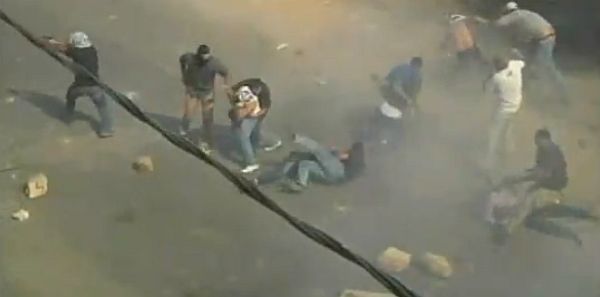
Two Arab legislators were injured in the violence. Afu Aghbaria, an Arab MP with the joint Jewish-Arab Communist party, said he had been hit in the leg.

Haneen Zoubi, a parliament member who has received hundreds of death threats since her participation in an aid flotilla to Gaza in the summer, also was among those hurt.

Ms Zoubi reported being hit in the back and neck by rubber bullets as she fled the area after police opened fire. In an interview with The National, she said she believed that she had been specifically targeted by police snipers after they identified her.

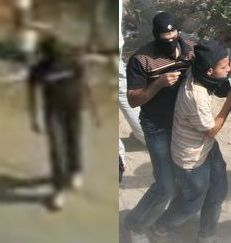
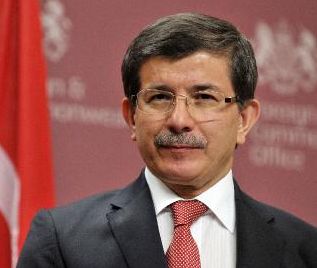
Israel deployed a secret police “mistaravim” unit (a Hebrew term meaning “disguised as an Arab”) in Umm al Fahm. In the image below, at least half a dozen such undercover operatives can be seen taking down demonstrators. The one on the far left appears to be firing a hand gun. The image is grabbed from news footage in a sequence that starts 38 seconds into the video shown below.

Dominic Waghorn at Sky News adds:

Israeli border police tactics in this week’s clashes in Umm al Fahm are being scrutinised.

The concentration and intensity of stun grenades and tear gas volleys unleashed on a few hundred Israeli Arab was unprecedented in many observers’ experience.

The police say they launched it as soon as the first stones were thrown. One Israeli Arab Knesset member claims the stones were thrown by undercover Israeli police masquerading as Arabs in the crowd.
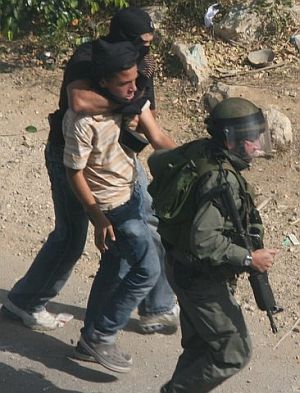
Israeli Channel 2 reported claims the tear gas volleys were fired in such a way because the crowd had just started turning on a suspected undercover police officer.

As Sameer Bazbaz captured in this sequence later [see image on the right], the undercover police were very active later, hiding among the crowd then pouncing on Israeli Arabs as uniformed colleagues swarmed to join them.

The undercover officer shown in the image above with his right arm firmly gripped around a teenager’s neck appears to be the same individual who can be seen at the beginning of the video above who 10 seconds in, can be seen at the road’s edge apparently picking up a stone to throw at Israeli police.
Facebooktwittermail

Leasehold settlements?

Haaretz reports:

Israel is conducting secret negotiations with the U.S. on establishing the future borders of a Palestinian state, the London-based Arabic language daily Asharq al-Awsat reported on Friday.

According to the report, Palestinian sources confirmed that the two sides discussed an option wherein Israel may lease lands in East Jerusalem from the Palestinians in exchange for the establishment of an independent Palestinian state.

Israel would lease the territories from the Palestinian state for a period of 40 to 99 years.

The Palestinian sources said that the talks are an American initiative that has been going on for some time in order to obtain an understanding with Israel regarding the terms surrounding a future Palestinian state.

The Palestinian Authority apparently has only recently been made aware of the talks and hasn’t been given the details of the proposal.

An Egyptian source told the newspaper that the negotiations are “more quiet than secret, and are meant to try to save the peace process.”

Neither the Prime Minister’s Office nor the U.S. government agreed to comment on the report.

Israel in secret negotiations with the US? I guess this confirms what has long appeared to be the case: that the Palestinians are regarded as being peripheral to the conflict. But I really don’t know what to make of this lease proposal. Britain held Hong Kong on a lease, but once the lease expired Hong Kong went back to China. Somehow I don’t see a Palestinian state ever having quite as much leverage as China. Neither, given its disregard for UN resolutions, do I see Israel feeling a heavy obligation to honor a legal contract limiting its occupation of East Jerusalem. The Israelis’ interests have always seemed to be focused on the so-called facts no the ground rather than legal issues of ownership.

Facebooktwittermail

Only the end of the West can save the West

The West is dead. Long live Turkey.

No, that isn’t meant to be some prophetic statement about the Islamization of Europe and the collapse of Western civilization. It’s simply a way of saying that what the West needs more than anything else is to find a way of redefining itself. None is more obvious than through seeing Turkey as the physical and metaphorical boundary which reveals that what we call the West only came into being and acquired its dynamic nature through its interactions with the rest of the world. The West, with a rippling eastern boundary and its abundance of vibrant ports is what it is by virtue of its ability to absorb what is foreign — not shield it out.

The easiest way Europe — and by extension the West — can redefine itself is by embracing Turkey and its dynamic role in the Middle East.

The Economist reports:

Turkish foreign policy used to be simple. Ever since Ataturk dragged the country into the modern world by driving out the sultan, adopting the Latin alphabet and abolishing the Muslim caliphate, the country has leant westwards. Since the second world war that has meant joining NATO (in 1952), backing the West against the Soviet Union and aspiring to join the European project. Like America, Turkey was also consistently pro-Israel.

It largely ignored the rest of its region, which includes most of the countries that were once part of the Ottoman empire. In his book “The New Turkish Republic”, Graham Fuller, a former CIA analyst and academic, recalls telling a Turkish friend that he was a Middle East expert, only to be asked, “so why are you in Turkey?” In similar vein, Turkish diplomats would tell their Western friends that “we live in a bad neighbourhood” and that “the Turk’s only friend is another Turk.”

Over the past few years all this has changed. Rather than feeling sorry for itself over its rough surroundings and lack of friends, Turkey has a new policy of “zero problems with the neighbours”. It is no longer carping at Armenia over its allegations of genocide in 1915 or reproaching the Arab world for its British-supported “stab in the back” in 1917-18. Instead it is cultivating new friendships in the region, offering trade, aid and visa-free travel. And far from backing Israel militarily and diplomatically, Turkey has become a leading critic.

The man largely responsible for engineering this dramatic shift is Ahmet Davutoglu, Turkey’s foreign minister since 2009. Before that he was an international-relations adviser to Mr Erdogan. In 2001, before the AK government came to power, Mr Davutoglu published a book, “Strategic Depth”, that set out a new policy of engagement with the region. He rejects accusations that he is “neo-Ottoman”, yet his doctrine certainly involves rebuilding ties round the former Ottoman empire.

Mr Davutoglu is an engaging, bookish character with a formidable knowledge of history. He thinks that Turkey made a mistake by ignoring its backyard for so long, and he is convinced that its new strategy of asserting its interests, both in the region and in the world, makes his country more, not less, attractive to the West. Nothing infuriates him more than articles in Western publications suggesting that Turkey has tilted east, or even claiming that “we have lost Turkey.” “Who is we?” he asks. After all, Turkey maintains NATO’s biggest army after America’s; it is committed in Afghanistan and other trouble spots; and it is negotiating to join the EU. As Mr Davutoglu puts it, “Turkey is not an issue; it is an actor.” His country now matters more than ever to Europe and the West, he claims.

Facebooktwittermail

The latest display of Israeli contempt for non-Jews

Imagine this: You want to move to a new town but before you can do so, you’ll have to submit an application to a committee that has to approve admission of new residents. And not just that — you can be excluded for the simple reason that in the committee’s opinion, you wouldn’t fit in. “Sorry, you’re not the kind of person suitable to live in our town.”

That will be the effect of a new law now moving through Israel’s parliament, and once enacted it will be used to keep Israeli Palestinians out of Jewish towns.

Haaretz reports:

The Knesset’s Constitution, Law and Justice Committee on Wednesday unanimously approved a bill which gives the right to absorption committees of small communities in Israel to reject candidates if they do not meet specific criteria.

The bill has sparked wide condemnation and many believe it to be discriminatory and racist, since it allows communities to reject residents if they do no meet the criteria of “suitability to the community’s fundamental outlook”, which in effect enables them to reject candidates based on sex, religion, and socioeconomic status.

The bill is due to be presented before the Knesset plenum in the coming weeks.

Israeli Arab MKs were outraged by the proposal and walked out on the committee’s discussion of it.

MK Talab al-Sana (United Arab List – Ta’al) called the bill racist and said it was meant to prevent Arabs from joining Israeli towns. MK Ahmed Tibi (United Arab List – Ta’al) compared the bill to racist laws in Europe during World War Two, and the two told the committee members before leaving the hall: “We will not cooperate with this criminal law – you have crossed the line.”

The committee’s chairman, David Rotem (Yisrael Beiteinu), responded to claims the bill was meant to reject Arabs from joining Israeli towns. “In my opinion, every Jewish town needs at least one Arab. What would happen if my refrigerator stopped working on a Saturday?”

Rotem’s disdainful comment is strongly reminiscent of Rabbi Ovadia Yosef’s recent claim: “Goyim were born only to serve us.” The sense of invulnerability these men exude as bigotry slides off their tongues, goes beyond arrogance. It amounts to a scathing contempt for humanity.

Facebooktwittermail

The challenge of religious pluralism in America

Legal scholar, Stanley Fish, writes:

The conflict between religious imperatives and the legal obligations one has as a citizen of a secular state — a state that does not take into account the religious affiliations of its citizens when crafting laws — is an old one…; but in recent years it has been felt with increased force as Muslim immigrants to Western secular states evidence a desire to order their affairs, especially domestic affairs, by Shariah law rather than by the supposedly neutral law of a godless liberalism. I say “supposedly” because of the obvious contradiction: how can a law that refuses, on principle, to recognize religious claims be said to be neutral with respect to those claims? Must a devout Muslim (or orthodox Jew or fundamentalist Christian) choose between his or her faith and the letter of the law of the land?

The context in which Muslims in America find their religion under assault is riddled with contradictions. Islamophobia — as The Tennessean reports — has become a profitable business in which fearmongers who profess no expertise on the subject are couching the “threat” from Islam in similar terms to the Red Menace of the 1950s.

“Islam,” says Pastor Darrel Whaley from Kingdom Ministries Worship Center in Rutherford County, Tennessee, “is political; it is ideas and philosophies; it’s not a religion at all… They want to take over America and the whole world.”


(The image in this video freezes after one minute but the audio continues uninterrupted.)

At the same time that Islam is being presented as an ideological threat to America, among those receptive to this message, another message resonates with equal strength: that Americans of faith are threatened by secularists who insist on imposing a separation of church and state.

When Colorado Republican Senate candidate and Tea Party favorite Ken Buck declared: “I disagree strongly with the concept of separation of church and state,” he drew a strong round of applause. Secularism and Sharia are seen by many as a dual threat to the American way of life.

One might imagine that — at least in theory — it would be possible for the embattled faithful, both Muslim and Christian, to find some common ground — at least one would if it were not for the fact that Christianity in America is in so many ways a secularized religion. That’s why the idea of religion shaping the whole life of the faithful is presented as foreign.

Religion in America has less to do with the devotional and ethical practices that circumscribe religious life, than with the experience of belonging to communities of affiliation within which a religious national identity finds expression. It’s about banding together around particular definitions of what it means to be American and taking on battles against those who pose a threat to these definitions.

For that reason, the fight against abortion is a much more popular cause than the fight against adultery. As with most crusades the preferred battleground is not home turf. Religious solidarity comes less through shared practice, than shared animosity.

But before the secularists here (and I include myself) start feeling too smug, Fish makes an important point:

[T]he respect liberalism can accord Islam (or any other strong religion) is the respect one extends to curiosities, eccentrics, the backward, the unenlightened and the unfortunately deluded. Liberal respect stops short — and this is not a failing of liberalism, but its very essence — of taking religious claims seriously, of considering them as possible alternative ways of ordering not only private but public life.

On that basis, it’s easy to adopt a live-and-let-live philosophy — well encapsulated in the COEXIST bumper sticker — in which tolerance is a kind of benign indifference. But coexistence in healthily functioning pluralistic societies must really go much further.
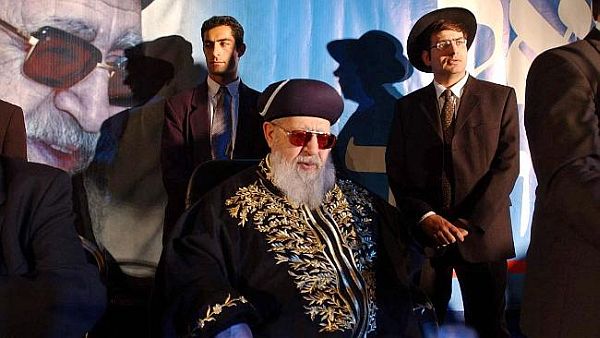
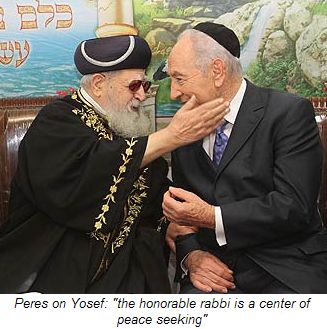
In an interesting talk, Muneer Fareed points out that the challenges America now faces have been addressed before and indeed that Islam in its formation saw its own existence in a pluralistic context.

[The Quran says] If God had so wanted, then all of humanity would be following one way. This is clear unmistakable evidence from the text itself, that Islam is a religion that doctrinally endorses, encourages and accomodates religious pluralism.

The faithful and fearful across America will remain unmoved, convinced paradoxically that this is an argument they cannot win even while truth remains on their side. According to the evangelicals, God does want all of humanity following one way and has chosen men like Pastor Darrel Whaley and Pastor Terry Jones to shepherd us in the right direction.

Facebooktwittermail

Israel’s vain quest for sovereignty

Why is it that a country that defines itself in terms of existential threats and the need to provide a safe refuge for the Jewish people, nevertheless seems strangely remiss in securing its own autonomy?

Even if Israel stands out as the preeminent military power in the Middle East, it has only been able to acquire this status through its dependence on the United States. It often masks that dependence by behaving like a brash teenager who is secretly terrified by the thought of leaving home.
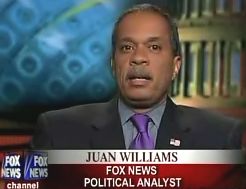
Last week, Rabbi Ovadia Yosef, the former Sephardi Chief Rabbi of Israel and spiritual leader of the Shas party — part of Netanyahu’s ruling coalition — made his latest inflammatory statement. In August Yosef called for the annihilation of the Palestinian people. This time he showed his contempt for humanity — at least that rather large portion which happens not to be Jewish, the Goyim.

Goyim were born only to serve us. Without that, they have no place in the world; only to serve the People of Israel …Why are gentiles needed? They will work, they will plow, they will reap. We will sit like an effendi [lord] and eat…

Yosef’s comments and the lack of censure they received from Israeli politicians, drew swift criticism from the Anti-Defamation League (ADL) Director Abraham Foxman and David Harris, executive director of the American Jewish Committee. Foxman warned that this might have a detrimental effect on Israel’s relations with American Jewry.

While leaders of the American Jewish community acknowledged the damage Yosef’s words could cause, they did not attempt to analyse them.

The Israeli-born anti-Zionist activist and musician, Gilad Atzmon suffers no such reservations.

In just a few words Rabbi Yossef expresses the depth of Judaic contempt towards labour.

The senior Rabbi provides us with a devastating glimpse into the Judaic alienation from these aspects of the human condition and human experience. In an unequivocal manner, Rabbi Yosef depicts a clear dichotomy: Jews are the master race and the Goyim are nothing but a work force. The Goyim are there to sweat and struggle while the Jew is ‘sitting’ and ‘eating.’ I guess that Rabbi Yossef has managed, in just a few words, to portray the intrinsic relationships between Judaism and Capitalism.

But in fact, Rabbi Yossef didn’t invent anything new here — his Saturday sermon sounds familiar enough to me. Karl Marx in his paper “On The Jewish Question,” identified aspects of Jewish ideology at the heart of Capitalism: “It is mankind (both Christians and Jews) that needs to emancipate itself from Judaism.”

Marx managed to identify an inclination towards exploitation at the heart of Jewish culture.

However, being a humanist, Marx wanted to believe that mankind (Jews and others) could overcome this tendency. Many early Zionists too, were also convinced that in Zion, Jews would liberate themselves and eventually become a nation like other nations, through productivity and labour.

Seemingly though, Rabbi Ovadia Yosef is not that impressed with either Marx, or some of the ideals within the early Zionist dream: Rabbi Yossef is brave (or foolish) enough to sketch the inherent bond between Jewish culture and Capital.

The only question that is still open is, for how long can the rest of humanity tolerate that kind of Rabbinical arrogance?

Meanwhile, the publication of a “millionaire’s list” last week, revealed Netanyahu’s complete dependence on foreign money for his fundraising efforts. His office in an attempt to explain his donor preferences released a statement in which they made the implausible claim: “His approach is that funds should be raised abroad so as not to put anyone in a potential conflict of interests, and this is the reason he prefers donations from abroad.”

On Capitol Hill, U.S. Rep. Eric Cantor, the Republican whip and the only Jewish Republican in the House of Representatives, is concerned that a GOP-led Congress which aims to cut foreign aid could make Israel vulnerable, since it receives more aid than any other country. A possible solution would be that aid to Israel be part of the US defense budget, adding new meaning to the idea that Israel and US interests are indivisible.

Israel demands that it be recognized as a Jewish state by the Palestinians. “Affirmation of Israel’s Jewishness…, is the very foundation of peace, its DNA,” says Israel’s ambassador to the US, Michael Oren. Yet in the shadow of this fixation on Jewish identity, we see a singular lack of interest in autonomy expressed through a religious leader’s contempt for work, a prime minister’s appetite for foreign money, and a Congressman’s concern that the umbilical chord tying Israel to the US not suffer any interruption or constriction in the steady supply of US tax dollars required for supporting the Jewish state.

Where in this condition is any understanding of the real meaning of sovereignty? Might not Israel’s greatest existential threats be the ones of its own making?

Facebooktwittermail

Lieberman orders a “day after” plan for dealing with a nuclear-armed Iran

Reuters reports:

Hardline Israeli Foreign Minister Avigdor Lieberman has commissioned a report on how to prepare for a nuclear-armed Iran as doubt mounts about the efficacy of preventive action, an Israeli source said on Monday.

Publicly, Israel has pledged to deny the Iranians the means to make a bomb but its previous, centrist government also discreetly drew up “day after” contingency plans should Tehran’s uranium enrichment pass the military threshold.

At the time, rightist opposition leader Benjamin Netanyahu called for Israel to consider preemptive strikes against its arch-foe’s nuclear sites. Now prime minister, Netanyahu has reined in such rhetoric while not ruling out the use of force.

In a sign the government is examining a full range of options, Lieberman, the most hawkish member of Netanyahu’s coalition, has ordered ministry strategists to draft a paper on “what to do if we wake up and discover the Iranians have a nuclear weapon,” said the senior Israeli political source, who declined to be named due to the sensitivity of the matter.

Considering the fact that Israeli leaders have been sounding the alarm about Iran’s “imminent” acquisition of nuclear weapons for over a decade, it’s a bit late in the day to be working on a “day after” plan. Indeed, it suggests rather strongly that despite warning that another Holocaust might be just around the corner, the leaders of a nation protected by its own arsenal of around 200 nuclear weapons has never been quite as afraid of Iran as they claimed.

Facebooktwittermail

Why the threat of cyber-warfare is being exaggerated

In an assessment of the dangers posed by cyber-warfare and while noting that the threats posed by cyber-warfare and cyber-espionage are repeatedly being conflated, Seymour Hersh points out that the interests of the National Security Agency and those of hackers coincide: both want communications networks that remain open to interception. But John Arquilla, who has taught since 1993 at the U.S. Naval Postgraduate School in Monterey, argues that privacy and security are complimentary. “We would all be far better off if virtually all civil, commercial, governmental, and military internet and web traffic were strongly encrypted,” he writes in his book, Worst Enemies.

At the same time, cyber-warfare fearmongers like Richard Clarke describe apocalyptic scenarios in which America could be crippled by China, though China’s motives for engaging in such an attack would be hard to fathom.

Within a quarter of an hour, 157 major metropolitan areas have been thrown into knots by a nationwide power blackout hitting during rush hour. Poison gas clouds are wafting toward Wilmington and Houston. Refineries are burning up oil supplies in several cities. Subways have crashed in New York, Oakland, Washington, and Los Angeles. . . . Aircraft are literally falling out of the sky as a result of midair collisions across the country. . . . Several thousand Americans have already died.

Hersh quotes James Lewis, a senior fellow at the Center for Strategic and International Studies, who points out that China is massively invested in the maintenance — not destruction — of America’s economic health: “Current Chinese officials have told me that we’re not going to attack Wall Street, because we basically own it” — a reference to China’s holdings of nearly a trillion dollars in American securities — “and a cyber-war attack would do as much economic harm to us as to you.”

[President Obama’s coordinator for cyber security] Howard Schmidt doesn’t like the term “cyber war.” “The key point is that cyber war benefits no one,” Schmidt told me in an interview at the Old Executive Office Building. “We need to focus on that fact. When people tell me that these guys or this government is going to take down the U.S. military with information warfare I say that, if you look at the history of conflicts, there’s always been the goal of intercepting the communications of combatants — whether it’s cutting down telephone poles or intercepting Morse-code signalling. We have people now who have found that warning about ‘cyber war’ has become an unlikely career path” — an obvious reference to McConnell and Clarke. “All of a sudden, they have become experts, and they get a lot of attention. ‘War’ is a big word, and the media is responsible for pushing this, too. Economic espionage on the Internet has been mischaracterized by people as cyber war.”

Schmidt served in Vietnam, worked as a police officer for several years on a SWAT team in Arizona, and then specialized in computer-related crimes at the F.B.I. and in the Air Force’s investigative division. In 1997, he joined Microsoft, where he became chief of security, leaving after the 9/11 attacks to serve in the Bush Administration as a special adviser for cyber security. When Obama hired him, he was working as the head of security for eBay. When I asked him about the ongoing military-civilian dispute, Schmidt said, “The middle way is not to give too much authority to one group or another and to make sure that we share information with each other.”

Schmidt continued, “We have to protect our infrastructure and our way of life, for sure. We do have vulnerabilities, and we do talk about worst-case scenarios” with the Pentagon and the Department of Homeland Security. “You don’t see a looming war and just wait for it to come.” But, at the same time, “we have to keep our shipping lanes open, to continue to do commerce, and to freely use the Internet.”

How should the power grid be protected? It does remain far too easy for a sophisticated hacker to break into American networks. In 2008, the computers of both the Obama and the McCain campaigns were hacked. Suspicion fell on Chinese hackers. People routinely open e-mails with infected attachments, allowing hackers to “enslave” their computers. Such machines, known as zombies, can be linked to create a “botnet,” which can flood and effectively shut down a major system. Hackers are also capable of penetrating a major server, like Gmail. Guesses about the cost of cyber crime vary widely, but one survey, cited by President Obama in a speech in May, 2009, put the price at more than eight billion dollars in 2007 and 2008 combined. Obama added, referring to corporate cyber espionage, “It’s been estimated that last year alone cyber criminals stole intellectual property from businesses worldwide worth up to one trillion dollars.”

One solution is mandated encryption: the government would compel both corporations and individuals to install the most up-to-date protection tools. This option, in some form, has broad support in the technology community and among privacy advocates. In contrast, military and intelligence eavesdroppers have resisted nationwide encryption since 1976, when the Diffie-Hellman key exchange (an encryption tool co-developed by Whitfield Diffie) was invented, for the most obvious of reasons: it would hinder their ability to intercept signals. In this sense, the N.S.A.’s interests align with those of the hackers.

Facebooktwittermail

Not getting to the promised land

“I just want to do God’s will. And He’s allowed me to go up to the mountain. And I’ve looked over. And I’ve seen the Promised Land. I may not get there with you. But I want you to know tonight, that we, as a people, will get to the promised land!” Dr Martin Luther King Jr, Memphis, Tennessee, April 3, 1968

“[T]oday, I state clearly and with conviction America’s commitment to seek the peace and security of a world without nuclear weapons. I’m not naive. This goal will not be reached quickly — perhaps not in my lifetime.” President Obama speaking in Prague, April 5, 2009

“I do know also that the future holds the possibility of progress, if not in our lifetimes then certainly in our children’s.” Hillary Clinton addressing the American Task Force for Peace in Washington DC, October 20, 2010

Is this the star by which President Obama plots his course: the promise of destinations that others must reach? Realism that just looks like cynicism, or cynicism dressed up as realism?

Just over a year ago, he sounded quite emphatic on the issue of the Middle East conflict — the issue on which Clinton now hints that progress may have to wait a generation.

Israelis must acknowledge that just as Israel’s right to exist cannot be denied, neither can Palestine’s. The United States does not accept the legitimacy of continued Israeli settlements. This construction violates previous agreements and undermines efforts to achieve peace. It is time for these settlements to stop.

I say sounded emphatic, but here’s the clue revealing Obama’s own lack of commitment: he leaves himself out. He is the observer rather than the agent. He doesn’t make demands.

What’s the use of an American president who can see the promised land but has no idea how to get there?

Less than two years after making Middle East peace central to his foreign policy agenda, Obama’s efforts have come to nothing.

The Washington Post reports:

In perhaps the shortest round of peace negotiations in the history of their conflict, talks between the Israelis and Palestinians have ground to a halt and show little sign of resuming.

Israeli Prime Minister Binyamin Netanyahu and Palestinian Authority President Mahmoud Abbas haven’t met since Secretary of State Hillary Rodham Clinton brought the two together on Sept. 15 in Jerusalem, two weeks after President Obama launched the resumption of negotiations on Palestinian statehood in Washington with much fanfare, including the presence of Egyptian President Hosni Mubarak and King Abdullah II of Jordan.

Now, the nearly six-week pause threatens to become permanent.

Pressure to restart the talks eased after the Arab League said it would wait a month – until Nov. 8 – before ending Abbas’s mandate for negotiations, thus pushing the issue beyond the U.S. midterm elections. But if Republicans score big gains, some Israelis argue, that could limit Obama’s ability to pressure Israel to make concessions. U.S. peace envoy George J. Mitchell is supposed to return to the region, but no date has been set.

In a speech Wednesday to Palestinian peace activists, Clinton acknowledged that “I cannot stand here tonight and tell you there is some magic formula that I have discovered that will break through the current impasse.”

While the administration has set a goal of achieving an agreement less than 11 months from now, Clinton at one point suggested a much longer time frame: “The future holds the possibility of progress, if not in our lifetimes, then certainly in our children’s.”

Facebooktwittermail

Clearing the fog of war in Iraq

The expression “fog of war” evokes both the confusion of the battlefield and the ways in which uncertainty can be used as propaganda tool to obscure the real nature of warfare.

One of the striking things about the statistics that Wikileaks have released is that the leading cause of death which accounts for half the 66,081 civilian deaths recorded between January 2004 and December 2009 is murder. This was not about ordinary people being the random victims of violence — caught in crossfire, or the targets of trigger happy soldiers, or simply being in the wrong place at the wrong time when roadside or car bombs caused carnage. These were extrajudicial executions, in the tens of thousands, occurring under the watch of American and coalition forces.

Patrick Cockburn writes:

From late in 2004 Interior Ministry troops trained by the Americans were taking part in savage raids on Sunni or suspected Baathist districts. People prominent in Saddam Hussein’s regime were arrested and disappeared for few days until their tortured bodies were dumped beside the roads.

Iraqi leaders whispered that the Americans were involved in the training of what were in fact death squads in official guise. It was said that US actions were modelled on counter-insurgency methods pioneered in El Salvador by US-trained Salvadoran government units.

It was no secret that torture of prisoners had become the norm in Iraqi government prisons as it established its own security services from 2004. Men who were clearly the victims of torture were often put on television where they would confess to murder, torture and rape. But after a time it was noticed that many of those whom they claimed to have killed were still alive.

The Sunni community at this time were terrified of mass sweeps by the US forces, sometimes accompanied by Iraqi government units, in which all young men of military age were arrested. Tribal elders would often rush to the American to demand that the prisoners not be handed over to the Iraqi army or police who were likely to torture or murder them. The power drill was a favourite measure of torture. It is clear that the US military knew all about this.

The Guardian reports:

Britain’s role in the alleged torture and unlawful killing of Iraqi civilians may be the subject of legal action following the publication of nearly 400,000 leaked military documents by the website WikiLeaks.

British lawyers said the classified US army field reports embroiled British as well as American forces in an alleged culture of abuse and extrajudicial killings in Iraq. Solicitor Phil Shiner of Public Interest Lawyers, appearing alongside WikiLeaks founder Julian Assange at a press conference in London today, said some of the deaths documented in the reports may have involved British forces and could now go through the UK courts.

The Iraq logs, Shiner said, indicated that UK as well as US commanders were likely to have ignored evidence of torture by the Iraqi authorities, contrary to international law. He said: “Some of these deaths will be in circumstances where the UK have a very clear legal responsibility. This may be because the Iraqis died while under the effective control of UK forces – under arrest, in vehicles, helicopters or detention facilities.”


Al Jazeera reports:

In October 2006, an Iraqi army unit reportedly robbed a number of people living in Sunni neighbourhoods in western Baghdad. The unit was arrested on October 11 – and told its captors that it was operating under the authority of Iraqi prime minister Nouri al-Maliki.

1/5/6 IA patrol stops 2X IA M1114s and 1X pick up truck occupied by 17X LNs in IA uniforms and equipment. 5/6 orders detenftion of all 17 individuals and vehicles due to reports over several days of 2X IA M1114s conducting robberies in the Mansour and Washash areas of 5/6 IA battle space.

[…] Detainees claim to be Iraqi special forces working for the prime minister’s office.

The unit seems to be a sort of “detention squad” operating under al-Maliki’s authority. An official from the defence ministry showed up several hours later and urged the US to release the men, saying their mission was “directed by PM Maliki”.

Politics, unsurprisingly, factors little into these leaked documents: They are ground-level assessments from army units, far removed from the government.

Still, some of the reports paint the Iraqi prime minister in an unflattering light, which may be why al-Maliki and his allies have described them as a smear campaign. “These are all just fakes from the Internet and Photoshop,” Hassan al-Sneid, a member of al-Maliki’s State of Law coalition, said on Saturday.

Facebooktwittermail

Torture and terrorism

One of the strange aspects relating to conspiracy theories concerning 9/11 is that they unwittingly obscure something even worse: that the US government foments terrorism not by design but by neglect; that its policies have had a direct and instrumental role in creating terrorists not simply by providing individuals and groups with an ideological pretext for engaging in terrorism but much more specifically by creating the conditions an individual’s political opposition to America’s actions would shift to unrestrained violent opposition.

The key which often unlocks the terrorist’s capacity for violence is his experience of being subject to violence through torture.

Chris Zambelis writes:

There is ample evidence that a number of prominent militants — including al-Qaeda deputy commander Dr. Ayman al-Zawahiri and the late al-Qaeda in Iraq leader Abu Musab al-Zarqawi — endured systematic torture at the hands of the Egyptian and Jordanian authorities, respectively. Many observers believe that their turn toward extreme radicalism represented as much an attempt to exact revenge against their tormentors and, by extension, the United States, as it was about fulfilling an ideology. Those who knew Zawahiri and can relate to his experience believe that his behavior today is greatly influenced by his pursuit of personal redemption to compensate for divulging information about his associates after breaking down amid brutal torture sessions during his imprisonment in the early 1980s. For radical Islamists and their sympathizers, U.S. economic, military, and diplomatic support for regimes that engage in this kind of activity against their own citizens vindicates al-Qaeda’s claims of the existence of a U.S.-led plot to attack Muslims and undermine Islam. In al-Qaeda’s view, these circumstances require that Muslims organize and take up arms in self-defense against the United States and its allies in the region.

The latest revelations provided by Wikileaks show how the war in Iraq — the centerpiece of the Bush administration’s war on terrorism — became not simply a terrorist training ground, but a cauldron in which terrorists could be forged.

FRAGO 242: PROVIDED THE INITIAL REPORT CONFIRMS U.S. FORCES WERE NOT INVOLVED IN THE DETAINEE ABUSE, NO FURTHER INVESTIGATION WILL BE CONDUCTED UNLESS DIRECTED BY HHQ. JUNE 26, 2004

The Guardian reports:

A grim picture of the US and Britain’s legacy in Iraq has been revealed in a massive leak of American military documents that detail torture, summary executions and war crimes.

Almost 400,000 secret US army field reports have been passed to the Guardian and a number of other international media organisations via the whistleblowing website WikiLeaks.

The electronic archive is believed to emanate from the same dissident US army intelligence analyst who earlier this year is alleged to have leaked a smaller tranche of 90,000 logs chronicling bloody encounters and civilian killings in the Afghan war.

The new logs detail how:

• US authorities failed to investigate hundreds of reports of abuse, torture, rape and even murder by Iraqi police and soldiers whose conduct appears to be systematic and normally unpunished.

• A US helicopter gunship involved in a notorious Baghdad incident had previously killed Iraqi insurgents after they tried to surrender.

• More than 15,000 civilians died in previously unknown incidents. US and UK officials have insisted that no official record of civilian casualties exists but the logs record 66,081 non-combatant deaths out of a total of 109,000 fatalities.

The Pentagon might hide behind claims that it neither authorized nor condoned violence used by Iraqi authorities on Iraqi detainees, but the difference between being an innocent bystander and being complicit consists in whether one has the power to intervene. The US military’s hands were not tied. As the occupying power it had both the means, the legal authority and the legal responsibility to stop torture in Iraq. It’s failure to do so was a matter of choice.

Will the latest revelations from Wikileaks be of any political consequence? I seriously doubt it, given that we now have a president dedicated not only to refusing to look back but also to perpetuating most of the policies instituted by his predecessor.

For more information on the documents released by Wikileaks, see The Guardian‘s Iraq war logs page.

Facebooktwittermail

How to deal with Islamophobia in the media

So, as just about everyone now knows, NPR analyst and Fox News contributor, Juan Williams said this to Bill O’Reilly on Monday:

I’m not a bigot… But when I get on the plane, I got to tell you, if I see people who are in Muslim garb and I think, you know, they are identifying themselves first and foremost as Muslims, I get worried. I get nervous.

When someone says, “I’m not a bigot,” we can generally be sure they’re about to say something that we’d expect to come out of the mouth of bigot. We can also infer that they’ve bought into an improbable idea: bigots identify themselves as such. Thus the implausible disclaimer: take my word for it — I’m not a bigot. Err, OK Juan, but I’m sorry. You don’t sound too convincing.

Jeff Bercovici notes:

The notion that “people in Muslim garb are scary” is widespread in America, and its noxious that many people believe as much. Countless people getting on planes have thought the same thing as Mr. Williams. This is exactly the sort of case where airing and logically refuting a bigoted view is better than making it so that it’s an unspoken thing that many people persist in thinking privately.

Thanks to NPR’s knee-jerk reaction, more is now being said about the fact that Williams got fired than the fact that what he said was both prejudiced and dumb. Not only does the debate have the wrong focus but Williams has now been rewarded for his “blunder” by getting a new three-year contract from Fox News worth almost $2 million.

The people with the greatest regrets right now are probably local NPR station managers whose current fundraising efforts have been disrupted by the ruckus.

NPR’s CEO Vivian Schiller says: “This isn’t a case of one strike and you’re out.” They have had “an on-going issue” with Williams.

The problem is, each time a journalist gets fired for making a dumb remark, this doesn’t improve the overall quality of journalism. Instead it means that those journalists who are most disciplined in concealing their views will have a professional advantage over those journalists guilty of the occasional indiscretion. My suspicion is that the well-wrapped bigots are more common than the bigots with loose tongues. Bigots are better clearly labelled than fired.

What consequences should Williams have faced for revealing his Islamophobia? How about mockery on the Daily Show where the evidence that known terrorists do not wear “Muslim garb” would swiftly have exposed the folly behind his fear.

What should really scare Williams and anyone else who wants to play spot-the-terrorist next time they fly is that terrorists can wear business suits, carry US passports and have names like David Headley.

Facebooktwittermail

The post-colonial era is slow coming

“It seems like the ragheads and the Pakis are worrying your dad, but your dad’s favorite food is curry and kebab,” sings Lowkey, summing up the multicultural dilemma facing quite a few white Englishmen.

Peyvand Khorsandi provides another multicultural vignette:

Golborne Road, on the outskirts of Notting Hill in west London, is home to two Portuguese cafés, Stella McCartney, and my favourite burger van, run by two Moroccan men. I’ve been a regular for almost 10 years – the van offers no ordinary fare. A ball of meat goes splat on the griddle as it’s evened into shape while onions sizzle.

Money and Arabic banter are exchanged – when the meat is crispy brown an egg is cracked open, stuffed alongside the patty into a heated bun with a sprinkle of chopped salad, fries and some warm, homemade, tomato sauce (fried prawns optional).

I am usually finishing off my second bowl of soup – they do a mean bean, lentil and pea – when the beaming parcel of beefy goodness is handed to me, smiling as a good burger should.

On Fridays Mohammed and Aziz repair to a mosque in the converted building opposite – customers find the van shut from around 12.30pm to 2pm. Caterers should hold these hours sacred but Mohammed and Aziz, as their prices testify, are not about money. The van’s closes for Ramadan.

The punters are largely Moroccan men but you do see Bohemian non-Moroccan women and men of all ages stopping off for a bite, too.

In the background the magnificent Trellick Tower — a hive of different people and cultures living next-door to, and on top of, each other — literally looks down on the rest of us.

If German Chancellor Angela Merkel’s declaration this weekend that multiculturalism has been an utter failure, was to be reduced to a motto, it might be this: we don’t want you, we just want your stuff.

That stuff includes all kinds of things from food, to cheap labor, to exotic artifacts, to land. But the one thing it excludes is non-native culture in the form of people.

If multiculturalism has failed it is only in as much as it has been conceived as a method for grappling with the legacy of colonialism. The problem with that notion is that colonialism hasn’t ended; it simply can’t be delineated on maps as clearly as it once could.

Meanwhile, out in the state that views itself as the most dangerous outpost of Western civilization, the old-fashioned colonial land-grabbing mindset was never more clearly expressed than it was a couple of years ago by Uzi Arad, currently Benjamin Netanyahu’s national security adviser. When asked whether it was time to abandon the two-state solution (and by implication for Israel to annex the West Bank) he responded: “We want to relieve ourselves of the burden of the Palestinian populations — not territories. It is territory we want to preserve, but populations we want to rid ourselves of.”

If there should be any doubt that we in the West remain shackled to mindsets shaped by colonialism, just look at the ever-widening chasm that separates Barack Obama as the embodiment of hope from Barack Obama, the 44th President of the United States.

The only chance that our multicultural president could be enticed to take an action requiring only a modicum of political daring during his upcoming trip to India — to visit Amritsar’s Golden Temple where head coverings are obligatory — would have been if the Sikh religious custodians of the temple deemed a baseball cap acceptable. The don’t. (As a reader here suggested in jest: “Why can’t he just wear a kippah? It would fulfill the requirement, and he loves sucking up to the Israelis.)

Tunku Varadarajan asks:

[W]hat does this decision to avoid Amritsar tell us about how this White House feels about Americans? Does it feel that ordinary Americans will pillory their president for having associated himself with “ragheads” in Amritsar? Is this a variant of that elite condescension for ordinary folks who are “bitter,” and who “cling to guns and religion”?

That Obama can’t find a way to explain the symbolism of a little square of cloth on his head — placed there by enthusiastic, welcoming Indian hosts who wish him and America well — suggests that he has lost confidence in his own intellect, his own charisma, his own eloquence. A man once celebrated for his promise of change now allows a state visit to be shaped by his fear of the blogosphere — and by his fear of abuse that might come at him from an ignorant subset of the American population. Let’s just call it the pygmification of a president, and lament the gutlessness of this White House.

The operative fears here no doubt include all those Varadarajan lists but he omits the most obvious one, the one that was probably decisive: the reasonable expectation that images of Obama with head covered, showing his respects at a foreign domed temple would feature in GOP attack ads during the 2012 presidential campaign. The political value of such images suggests that the “ignorant subset” this commentator dismisses, penetrate much more deeply into mainstream America than he cares to admit.

Obama’s failing — and it is unforgivable — is that rather than challenge prevailing prejudices he has chosen to accommodate them.

When he meets India’s Prime Minister Manmohan Singh — note that he is a Sikh in a majority Hindu nation — will Obama muster the courage to put his hands together and say namaste?

Facebooktwittermail