Category Archives: Editorials

The decline of the West

Perhaps the clearest evidence of the decline of Western civilization is the example of those who now shout it its defense.

In the name of protecting civilization, a movement promoting racial supremacism is infecting Western consciousness with the notion that a set of values and cultural constructions is now in jeopardy when in fact our civilization’s corruption is already well advanced.

If the progress of Western civilization came about through the unfettering of the power of the people in egalitarian societies, that trend was quietly reversed as citizens became consumers. In recent decades, that decline further deepened as economic “advance” turned out to be a mask concealing expanding inequality.

In the hollow culture which this has created, beyond employing a stock of well-worn platitudes about freedom and liberty, civilization’s self-appointed protectors find it easier to spotlight purported threats than describe exactly what they are defending.

In this context we should note that American culture remains influenced by European culture more than any other and to the extent that Europe provides a cultural compass, we should be alarmed at the direction this now points. An ocean will not protect us from its influence.

Christian Science Monitor reports:

A new survey in Germany shows that 13 percent of its citizens would welcome a “Führer” — a German word for leader that is explicitly associated with Adolf Hitler — to run the country “with a firm hand.”

The findings signal that Europe’s largest nation, freed from cold-war strictures, is not immune from the extreme and often right-wing politics on the rise around the Continent.

The study, released Oct. 13 by the Friedrich Ebert Foundation, affiliated with the center-left Social Democratic Party, revealed among other things that more than a third of Germans feel the country is “overrun by foreigners,” some 60 percent would “restrict the practice of Islam,” and 17 percent think Jews have “too much influence.”

The study’s overall snapshot of German society shows new forms of extremism and hate are no longer the province of far-right cohorts who shave their heads or wear leather jackets adorned with silver skulls – but register in the tweedy political center, on the right and the left. Indeed, the study found, extremism in Germany isn’t a fringe phenomenon but is found in the political center, “in all social groups and in all age groups, regardless of employment status, educational level or gender.”

The year 2010 is marking a clear shift toward extremist politics across Europe, analysts say. An uncertain economy, a gap between elites and ordinary Europeans, and fraying of a traditional sense of national identity has just in the past month brought more hard-line politics and speech, often aimed at Islam or immigrants – into a political mainstream where it had been absent or considered taboo.

On Oct. 10, the city of Vienna, a cosmopolitan and socialist stronghold since World War II, voted the far-right Freedom Party into a ruling coalition. The party, which ran on an “anti-minaret” platform in a city with only one mosque, was formerly associated with nationalist Jorg Haider, but has been reinvented by an animated former dental hygienist, Heinz-Christian Strache.

On Sept. 19, Sweden, long a Scandinavian redoubt of social tolerance and openness, put the far-right Sweden Democrats into parliament for the first time.

Further, this week the Netherlands saw the rise to influence, if not power, of the anti-Islam party of Geert Wilders, a social liberal who argues for gay rights – but whose main platform is to ban the Quran and the practice of Islam in the Low Countries. Mr. Wilders’ party will formally participate in the Dutch ruling coalition without specifically joining it.

Ian Buruma writes:

All these countries may soon be following the Danish model, in which the illiberal populist parties pledge their support without actually governing, thereby gaining power without responsibility. Denmark’s Conservative government could not govern without the support of the People’s party. Sweden’s recently re-elected conservative Moderate party will have to rely on the Democrats to form a viable government. And Wilders has already received assurances from the conservative and Christian Democrat parties that, in exchange for his support, the burqa will be banned in the Netherlands and immigration curbed.

The influence of these slick new populists, waging their war on Islam, goes well beyond their countries’ borders. Nativism is on the rise all over the western world, and Wilders, in particular, is a popular speaker at rightwing anti-Muslim gatherings in the US, Britain and Germany.

European populism focuses on Islam and immigration, but it may be mobilising a wider rage against elites expressed by people who feel unrepresented, or fear being left behind economically. They share a feeling of being dispossessed by foreigners, of losing their sense of national, social, or religious belonging. Northern Europe’s political elites, largely Social or Christian Democrats, have often been dismissive of such fears, and their paternalism and condescension may be why the backlash in those liberal countries has been particularly fierce.

The question is what to do about it. One possible solution is to let populist parties join the government if they get a sufficient number of votes. The idea of a Tea Party candidate becoming US president is alarming, to be sure, but European populists could only be part of coalition governments.

True, Hitler’s Nazis took over Germany almost as soon as they were voted into power, but the new European right are not Nazis. They have not used violence, or broken any laws. Not yet. As long as this is so, why not give them real political responsibility? They would then not only have to prove their competence, but also moderate their attitudes.

Buruma’s assumption that governance inherently imposes a moderating effect, seems very dubious. Look at Avigdor Lieberman and his Yisrael Beiteinu party in an Israel that prides itself on its Western identity. There’s little evidence that participation in government has forced them to turn away from extremism.

The underlying idea here is one that has guided the eviscerated Left for the last two decades: that the political challenges of the day can only be met by some form of reaction or accommodation through which the sacred political center can be reclaimed. The idea that the Left provides a genuine political alternative has — at least by mainstream politicians — been effectively abandoned.

This is the context in which an American underclass is expanding, ready to be corralled by rightwing, xenophobic opportunists.

The Guardian‘s Paul Mason went to Atlanta to see how economic decline is reshaping American society.

Unable to borrow or earn, a whole generation is being shut out of the American lifestyle.

Meanwhile, some states have begun a race to the bottom: slashing welfare, labour regulations and local taxes to attract investment. High-wage companies close and relocate to low-wage states, and foreign investment flows to the towns where labour costs are lowest. These states are being transformed by the arrival of low-waged Hispanic migrants even as the rightwing politicians who support the economics rail against the demographics.

As a result the so-called Sun Belt, identified by Republican strategist Kevin Phillips in the 1970s as the new political bedrock of conservatism, now feels like the unhappiest place in America. Median incomes in the south are, on average, $8,000 lower than in the northeast; poverty rates are higher than anywhere else in America — and so are the racial and religious tensions.

In the midterm elections politicians have promised to “do something” for the middle class. The kindest thing they could do is tell the truth: Americans have been living a middle-class lifestyle on working-class wages — and bridging the gap with credit. And it’s over.

Instead, the message is that the American way of life is as good as ever — just so long as it can be protected from foreign threats: the economic threat from undocumented Latino workers and the cultural threat from dangerous Muslims.

A real alternative, however, would go much further than pointing out that most Americans have for too long been living beyond their means — it would spell out that the American dream is built on a false promise and our concern should not be reduced to who has access to its fulfillment and who does not. That false promise is that the good life flows from the good stuff.

In one of the tales of Mullah Nasrudin, his friend finds him in misery with bleeding lips as he chews on red hot chillies. “Why do you keep on biting into those chillies?” his friend asks. “I’m looking for the sweet one,” the Mullah answers as he digs deeper into his basket. We too find it difficult to abandon that futile quest for a sweet chili.

America now suffers less from the consequences of easy access to credit than the fact that we have virtually no conception of material sufficiency. Our fascination with the future is driven by an experience of the present as defined by unmet needs. Ours is a condition of perpetual insufficiency. The land of opportunity is populated by people who can never have enough.

Only when we discover we have enough can we pause, take stock and consider what is of real value. The defense of civilization consists not in thwarting foreign threats but recognizing the ways in which we value or devalue civilization’s core assets.

We are now warned of a dreadful “Japanification” of America if consumers refuse to consume.

Is that all that Americans are: the earthworms of the global economy? Or might we find some hidden wealth through material loss?


Facebooktwittermail

Time to make national heroes out of those who steal secrets and publish them in the newspaper

Coleen Rowley, legal counsel to the FBI field office in Minneapolis from 1990 to 2003 and Bogdan Dzakovic, a special agent for the Federal Aviation Authority’s security division, suggest that had WikiLeaks existed in 2001, they might have been able to make public information that could have prevented the 9/11 attacks.

In the Los Angeles Times they write:

The 9/11 Commission concluded, correctly in our opinion, that the failure to share information within and between government agencies — and with the media and the public — led to an overall failure to “connect the dots.”

Many government careerists are risk-averse. They avoid making waves and, when calamity strikes, are more concerned with protecting themselves than with figuring out what went wrong and correcting it.

Decisions to speak out inside or outside one’s chain of command — let alone to be seen as a whistle-blower or leaker of information — is fraught with ethical and legal questions and can never be undertaken lightly. But there are times when it must be considered. Official channels for whistle-blower protections have long proved illusory. In the past, some government employees have gone to the media, but that can’t be done fully anonymously, and it also puts reporters at risk of being sent to jail for refusing to reveal their sources. For all of these reasons, WikiLeaks provides a crucial safety valve.

“Dr Ellsberg, do you have any concern about the possibility of going to prison for this?” Daniel Ellsberg was asked after he had leaked the Pentagon Papers to the New York Times in 1971.

Wouldn’t you go to prison to help end this war?” Ellsberg responded.

Since 9/11, how many employees or now former-employees of the US government have asked themselves whether actions they declined to take at the most opportune moment could have prevented a decade of war and the loss of hundreds of thousands of lives?

The idea that WikiLeaks could have facilitated such actions, seems to me, to have more to do with soothing troubled consciences than with a need to make whistle-blowing easier.

Ambassador Joe Wilson published his famous op-ed, “What I Didn’t Find in Africa,” in July 2003, once it was clear that weapons of mass destruction were not going to be found in Iraq. The day he should have gone public with what he knew was January 29, 2003 — the day after President Bush’s State of the Union speech in which Bush falsely claimed: “The British government has learned that Saddam Hussein recently sought significant quantities of uranium from Africa.”

What Wilson lacked was not WikiLeaks but the courage of a man like Ellsberg and the willingness to place the interests of others above his own.

Rather than looking for ways to make whistle-blowing safer, we might benefit more as a society if we more whole-heartedly celebrated those who risk their careers and even their liberty by following the dictates of their conscience.

While WikiLeaks can perform a vital function, we should not lose sight of the fact that the political impact of whistle-blowing can have more to do with the power of a public act of conscience than with the information that is revealed. When an individual in a position of authority takes a huge personal risk because of their allegiance to truth, the sheer power of their integrity calls the operations of government into question. The availability of WikiLeaks cannot make up for the shortage of Ellsbergs.

Facebooktwittermail

Israel’s identity problem

Michael Oren, Israel’s ambassador to the United States, is calling for an end to Israel’s invisibility.

Whatever Israel suffers from, invisibility is not among its problems. A country like Lesotho might wish for greater visibility, but Israel already claims a share of the world’s attention that vastly outsizes its importance.

Oren’s appeal for attention however, is not directed at the world — the pining for acceptance that he articulates is that the Palestinians should recognize Israel as a Jewish state. Isn’t it strange that Israelis could prize the opinions of Palestinians so highly while treating their lives so harshly? (Yes, I’m being sarcastic.)

Affirmation of Israel’s Jewishness… is the very foundation of peace, its DNA. Just as Israel recognizes the existence of a Palestinian people with an inalienable right to self-determination in its homeland, so, too, must the Palestinians accede to the Jewish people’s 3,000-year connection to our homeland and our right to sovereignty there. This mutual acceptance is essential if both peoples are to live side by side in two states in genuine and lasting peace.

As the saying goes, possession is nine-tenths of the law, so Oren’s claim that Israel already accords the same level of recognition to Palestinians that it now demands from them, doesn’t mean much. The Palestinian homeland (which he posits not as their homeland but its homeland), is clear in only one respect: it is located some place else than “our” homeland. And this of course denies any conventional notion of a homeland which would likely include the place ones grandparents or great grandparents lived — the place where ones ancestral roots trace back centuries.

Oren cherry-picks part of the Balfour Declaration noting that it “called for the creation of ‘a national home for the Jewish people’ in the land then known as Palestine,” but neglecting that part of the very same sentence which says “it being clearly understood that nothing shall be done which may prejudice the civil and religious rights of existing non-Jewish communities in Palestine.” Had a national home for the Jewish people actually been established on those terms, it’s hard to see how it could have been established as a Jewish state. Certainly three quarters of a million Palestinians could not have been driven out of the homes and off their land.

“The core of the Israeli-Palestinian conflict has been the refusal to recognize Jews as a people, indigenous to the region and endowed with the right to self-government,” Oren claims, yet could have much more reasonably asserted: “The core of the Israeli-Palestinian conflict has been the refusal to recognize Palestinians as a people, indigenous to the region and endowed with the right to self-government.”

What’s Oren and the Israeli government’s agenda here? Having fully grasped the fact that they now have a desperate sucker in the White House batting for them, they’re going for gold: push the Palestinians to relinquish their right of return in exchange for a momentary continuation in the slight slowdown of colonial expansion in the West Bank. What a deal! Except of course they know full well that even Mahmoud Abbas is not going to make a concession like this, so, as has happened so many times before, Israel makes an impossible demand so that once it is refused the Palestinians can be portrayed as intransigent.

It’s a game that Israel will continue to play for as long as it believes that it has more to lose than it has to gain from a peace agreement.

Facebooktwittermail

How did 1938 turn out to be such a long year?

It’s 1938 and Iran is Germany and it’s racing to arm itself with atomic bombs,” Benjamin Netanyahu declared four years ago.

By 1942, Germany had snared itself in the disastrous Battle of Stalingrad — but let’s allow Netanyahu some latitude with his metaphor and assume that it’s still 1938 and that Iran’s race has merely suffered a few interruptions.

So, it’s still 1938 and Iran’s Hitler has come to Israel’s border to survey the nation he intends wiping off the map.

In anticipation of this historic moment, Aluf Benn wrote last month:

Netanyahu will have a one-time opportunity to stop the new Hitler and thwart the incitement to genocide. Ahmadinejad will pay his first visit to Lebanon and devote an entire day to a tour of the southern part of that country. He will visit sites where Hezbollah waged battles against Israel and, according to one report, he will also pop over to Fatima Gate, just beyond the border fence at Metula. The route is known, the range is close and it is possible to send a detail across the border to seize the president of Iran and bring him to trial in Israel as an inciter to genocide and Holocaust denier.

The media effect will be dramatic: Ahmadinejad in a glass cage in Jerusalem, with the simultaneous translation earphones, facing grim Israeli judges. In the spirit of the times, it will also be possible to have foreign observers join them (David Trimble of the Turkel commission was a leader of the “try the Iranian president” initiative ).

There are also operational advantages: Iran will hesitate to react to its president’s arrest by flinging missiles, out of fear for their leader’s life. It will also be possible to capture Hezbollah leader Hassan Nasrallah, who will no doubt emerge from his hiding place and accompany Ahmadinejad. Israel will have high-ranking hostages it will be able to exchange for Gilad Shalit.

And if the world has any complaints, it will be reminded that the Americans invaded Panama in order to arrest its ruler Manuel Noriega – and only for dealing drugs, a far smaller offense than incitement to genocide.

Of course, the idea also has disadvantages. Ahmadinejad might be killed in the action and Iran would embark on a cruel war of revenge. The precedent of arresting leaders would endanger Israeli personages suspected abroad of crimes against humanity or murder (according to the Goldstone report and the flotilla report ). Ahmadinejad could be acquitted and make Israel look like a bully and Netanyahu a fool.

Nevertheless, how can Netanyahu refrain from an action to stop Hitler’s heir, when the year is already 1939, if not 1940? According to Netanyahu’s reasoning, if he refrains from acting history will condemn him for “not preventing a crime,” as with Margalit Har-Shefi, who didn’t stop Yigal Amir from assassinating Yitzhak Rabin.

Benn’s point was not to advocate a reckless course of action but to underline the difference between rousing rhetoric and statesmanship.

For all those inside and outside Israel who swallowed Netanyahu’s rhetoric however, this is a telling moment to reflect on the proposition that the clown from Tehran — provocative as he might be — can seriously be compared to Hitler. Anyone who still clings to this notion must now consider its corollary: that if Ahmadinejad is Hitler, then Netanyahu — through his inaction — turns out to be a Chamberlain not Churchill.

So how truly significant is it that Iran’s president is currently now enjoying all the honors of a visiting head of state (even though he isn’t one)?

Rhami Khouri puts the drama in perspective and says:

[Ahmadinejad’s] visit represents a blow to Washington’s strategy of bringing Lebanon firmly into its orbit.

For most Arab governments, the Iranian-Hizbullah connection represents everything they fear for their own incumbency: armed Shiite movements inside countries where mostly Sunni Muslim Arabs dominated public life; popular resistance movements that do battle according to their own strategic calculations; Iranian meddling in Arab affairs; and, Arab mass movements that connect with compatriots across the region in their common opposition to and defiance of conservative Arabs, Israel and the US itself.

So at some levels it is understandable why so many people in the region and abroad are making a lot of noise about the Iranian president’s visit to Lebanon. At another level, though, that of substance vs. symbolism, this is a pretty routine event that does not necessarily break new ground, but mainly reflects and emphasizes existing political realities that generate frenzied, nearly hysterical, reactions on both sides.

The irony is that by elevating his importance on the international stage while his real challenges come from home, no one serves Iran’s president as more effective publicists than do Israel and the United States.

As Meir Javedanfar notes:

Ahmadinejad has never been more unpopular in Iran, not only with the public but also his conservative allies and the clergy. By going to Lebanon, he is going to one of the last places where the Islamic Republic still has genuine support. When he speaks in Bint Jbeil, unlike in Iran, schools won’t be closed and civil servants won’t be threatened with dismissal unless they attend the president’s speech. People will voluntarily turn up because they genuinely support the Islamic republic and will pay respect to almost any senior Iranian politician.

By going to Lebanon, Ahmadinejad will primarily be using the occasion to try to strengthen his support back home with the public, and with the Revolutionary Guards, whose support is important to him. He will also be trying to outshine his rivals such as Ali Larijani and Hashemi Rafsanjani by using the trip to say that he is the true face of Iran abroad, and not them.

This development will also benefit supreme leader Ali Khamenei, who is most probably very concerned about Ahmadinejad’s flagging popularity.

What is important to note is that such a visit did not take place when Khatami was president. If anyone deserves to be in southern Lebanon, it is him, and not Ahmadinejad. Israel evacuated southern Lebanon in May 2000 on Khatami’s watch, not Ahmadinejad’s.

However, Khamenei did not send Khatami to southern Lebanon because he was not worried about his unpopularity. In fact, compared with Ahmadinejad, he was far more popular. The opposite is true about Ahmadinejad and this is why Khamenei, for the sake of his regime, is sending him there.

The RealNews Network has an interesting report on Ahmadinejad’s posture as an anti-capitalist.

Facebooktwittermail

Might the US be holding a fugitive Mossad agent in secret detention?

Eight months after the murder of the Hamas commander, Mahmoud al-Mabhouh, in Dubai, two reports in the last few days present intriguingly contradictory pictures.
First came a Wall Street Journal report on Friday with the headline, “In Global Hunt for Hit Men, Tantalizing Trail Goes Cold.”

The Journal has followed this story more closely than any other US newspaper and this report contained some interesting new information — such as that one of the key suspects, recently using the name Christopher Lockwood, had previously used the identity of a young Israeli soldier, Yehuda Lustig, who was killed during the Yom Kippur War in 1973.

Still, as the headline suggested, investigators were no closer to tracking down Lockwood or any of the other suspects widely assumed to be Israeli Mossad agents. An Israeli who had been arrested in Poland, extradited to Germany and then released on bail in August, swiftly returned to Israel.

The trail has gone cold — but not according to Lt Gen Dahi Khalfan Tamim, the Dubai chief of police. He told The National on Monday that in fact a major suspect was arrested two months ago by a Western country but authorities in that country have requested that no information about the arrest should be made public.

The Abu Dhabi newpaper reported: “The country that arrested the suspect two months ago is not believed to be European.”

So which Western countries do we already know are involved in the case? The only non-European Western country that suspects are known to have traveled to after the murder is the United States.

A suspect traveling as an Irishman, Evan Dennings, entered the US on January 21, the day after Mabhouh’s body was found. And another suspect traveling with a British passport under the name, Roy Allan Cannon, casually entered the US on February 14, right in the middle of the period when the story was receiving global media attention.

The Journal now reports on these suspects that:

Their passport details showed up in a U.S. border-control system that collects electronic manifests of international flights and screens them against passenger watch lists, according to people familiar with the probe and to investigation documents reviewed by the Journal. That suggested the suspects had boarded planes bound for the U.S. The information was passed to international investigators involved in the case, raising hopes of a capture.

But the U.S. Department of Homeland Security has since said it doesn’t have records of the two suspects in its system.

It doesn’t have the records — meaning the records have vanished? Been handed over to a different agency, such as the FBI? Or what?

Something doesn’t add up here.

If it turned out that a suspected murderer who belonged to Mossad was arrested in the US, there’s no doubt that the Obama administration would be in a quandary about how to proceed. The one thing we can sure of is that it would guard its actions with the utmost secrecy.

Facebooktwittermail

Israel is ceasing to be a Jewish state and turning into a state for some Jews

Carlo Strenger has an interesting op-ed in Haaretz. It’s worth reading the whole piece (part of which appears below). Comments of mine follow.

There is nothing left to say about how bad, harmful and useless the new citizenship law is: Labor Party Minister Isaac Herzog has warned that it is another step towards fascism; legal experts like Mordechai Kremnitzer have pointed out that it doesn’t serve any identifiable purpose except making Arabs feeling even less at home in Israel. Likud Ministers Benny Begin and Dan Meridor have pointed out how harmful the law is for the relation with Israeli Arabs and for Israel’s standing in the world.

Both Shas and Yisrael Beiteinu have already declared that they see this law as just a first step in a general attempt towards ensuring loyalty to the state by legislation. The time has come to ask what really stands behind this rising tide. The obvious answer seems to be that it is directed against both Israel’s Arab citizenry, whom Avigdor Lieberman is alienating and insulting almost every day, and Palestinians who want to gain Israeli citizenship.

But I think that this is not the whole story. Consider this strangest of alliances between Yisrael Beiteinu and Shas; one is a completely secular, ultra-nationalist, the other an ultra-Orthodox party. What do they have in common? Why are they lately so effectively cooperating with each other, together with other extreme-right parties?

I believe that what unites them is less a fear of Israel’s enemies (and Israel does have enemies). It is a visceral hatred for the Western values and the liberal ethos. They all hate freedom; they all hate the idea of critical, open discourse, in which ideas are discussed according to their merit. They keep criticizing what they see as the liberal bias of the media and academia, and they have made sustained attempts to curtail freedom of speech at the universities.

Lieberman’s disdain for these ideas breaks through at every possible moment: lately he has insulted French Foreign Minister Bernard Kouchner and Spanish Foreign Minister Miguel Moratinos, telling them they should take care of their own problems in Europe before they come to advise Israel. This has been typical of him for a long time: Lieberman thinks that Israel should turn east; that it should no longer define itself as a Western country, and should finally shake off Israel’s original commitment to be part of the Western world.

Shas has made clear for decades that it just plays along with democracy; that it doesn’t believe in the idea of citizens thinking critically: they believe that only their spiritual leader, Ovadia Yossef, must determine what is right and what is wrong. Other ultra-rightists have been feeling for a long time that the commitment to universal values is undermining their program for the greater Israel in which Palestinians should have no political rights.

They cannot stand the idea that a liberal democracy should be based on rational legislation and is open to criticism by all. They are furious that tribal loyalty is not above criticism. Just lately, national religious rabbis have claimed that studying at universities is a danger for young religious people, because they internalize too many enlightenment values.

We are really talking about a right-wing anti-liberal coalition united by an instinctive hatred against the idea that there are universal standards of rationality and of morality. They do not want to hear criticism of their worldviews that relies on ideas that have, for a long time, been common to the free world. What we are seeing is a fight about Israel’s cultural and political identity.

For many liberal Israelis, the proposed new citizenship law represents a red line which once crossed will lead inexorably to the end of Israeli democracy. The foundation of that fear is the conviction that Israel has a democracy to lose.

Point out the contradictions inherent in the idea of a Jewish democracy, which by its nature grants preferential rights to Jews, and the liberal-Zionist shrug is to say, it’s a work in progress. No democracy is perfect.

Still, a real threshold has emerged and it consists above all in matters of perception: Israel is becoming a state which no longer serves and is instead threatening the needs of liberal Jewish identity — an identity in which neither half is meant to subvert the other.

Israel is ceasing to be a Jewish state and turning into a state for some Jews.

One could argue that this has long been the case, since for most Jews Israel is either an imaginary life insurance policy or of no particular relevance to their own lives. Even so, what has sustained Israel is the importance of the idea of a Jewish state in the minds of most Jews, irrespective of where they choose to live.

In this context, the Palestinians are irrelevant. They are peripheral to a conversation that has less to do with contested rights than it has to do with contested Jewish identity.

No wonder the peace process has gone nowhere. The wrong parties have been engaged in negotiations.

There is no Israeli consensus because there is no Jewish consensus. The tribe no longer exists (if it ever did) but rather than confront that fact, it has been hidden behind a veil: the unquestionable need for a Jewish state.

As the need for a Jewish state becomes untethered from Jewish identity, no wonder there is a drive to chain it to the law.

Facebooktwittermail

Pamela Geller’s English friends — Islamophobes united

(Update below)

Pamela Geller — “hate monger and anti-mosque queen bee,” as she has been dubbed by Charles Johnson at the conservative blog where she got her start — has “helped bring into the mainstream a concept that after 9/11 percolated mainly on the fringes of American politics: that terrorism by Muslims springs not from perversions of Islam but from the religion itself,” write Anne Barnard and Alan Feuer in a New York Times profile.

Geller’s profile is twice the length of a piece Barnard wrote on Park51’s Imam Feisal Abdul Rauf in August. That’s presumably because Geller is now “a media commodity.”

Not until we get close to the end of the Geller profile do we hear mention of her connections to the notorious fascist group, the English Defence League.

Ms. Geller went on to champion as patriotic the English Defense League, which opposes the building of mosques in Britain and whose members have been photographed wearing swastikas. (In the interview, Ms. Geller said the swastika-wearers must have been “infiltrators” trying to discredit the group.)

In March, when the EDL held a rally in support of the visiting Dutch politician and anti-Islam leader, Geert Wilders, Geller wrote:

How I wish I could be there to stand with the English Defense League.

The EDL’s notoriety has no doubt been fueled by its more photogenic members and their drunken behavior, but the movement is not only attracting disaffected white skinheads.

In May, The Guardian (see also the accompanying video) recounted meeting an EDL leader who alluded to the group’s growing links to the US.

On a chilly evening in early March, Alan Lake settles into his seat in a cafe in central London. This smartly dressed man in his mid-40s has emerged as a key figure in the organisation and is quickly into his stride — warning that the UK will have Sharia law in the next 40 years “unless something is done”.
A London-based IT consultant, Lake has spoken at several EDL rallies and sees himself as one of the organisation’s thinkers. “The middle-class intellectuals are coming forward and also American speakers – some of them quite famous, although I can’t give you names yet … they love the fact that we can have people that can go on the streets.”

Addressing a far-right anti-Islam conference in Sweden last year, Lake told delegates it was necessary to build a united “anti-Jihad movement” and spoke of the need for “people that are ready to go out in the street”, boasting that he and his friends had begun to build alliances with “more physical groups like football fans”. Lake says he is opposed to violence or confrontation but regularly returns to the importance of the EDL’s physical presence.

In a post at the 4Freedoms Community website, Lake described his vision of segregation in the UK in the coming decades:

In 20 or 30 years the UK will start to fragment into Islamic enclaves and non-Islamic areas around them. Its time we decided who will be allowed in the non-Islamic areas. These are the people who we will force into the Islamic enclaves (and who we will execute if they sneak out).

By forcing these liberal twits into those enclaves we will be sending them to their death, at worst, and at best they and their families will be subjected to all the depredations, persecution and abuse that non-Muslims worldwide currently ‘enjoy’ in countries like Pakistan, Iran and Egypt. It will be great to see them executed or tortured to death…

Please everyone, start to contribute the names of all those we will send with their wives and children to enjoy the religion of peace. We are taking away the middle ground for sympathisers and appeasers. Sure, they can say they support the gangsters of Islamism if they want, it’s their choice! But we will not let them just stand in the middle and say it, hanging back from actually BEING WITH those Hamas and Hizbullah endorsing gangs. If they like that so much, they can be with them, lock, stock and barrel.

Here’s some names to start off. Please note this is a discussion, we need to work it out before sending them to their sordid end.
1. Rowan Williams, the Archbishop of Canterbury
2. David Cameron [Britain’s prime minister]
3. Nick Clegg [Britain’s deputy prime minister]

After this post caught the attention of Indymedia, Lake made some revisions and wrote: “I said execute the leftists that left the Islamic enclaves — yes that was a bit provocative, but I was trying to be brief.”

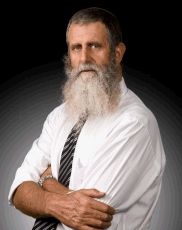
In a further indication of the blossoming relationship between America and Britain’s anti-Islam movements, the EDL has announced an upcoming event, welcoming Rabbi Nachum Shifren who is a candidate for California State Senate District 26.

“The English Defence League Event @ Embassy of Israel” has this description on Facebook:

The English Defence League will be holding an event in London on Oct 24th in support of Israel, we have an orthodox Rabbi joining us from Los Angeles who is fighting Sharia in L.A and running for state congressman there, we sympathise with what Israel are going through, it’s the only country in the west that is tackling the issues we highlight, we have seen members of the Islamic community hold anti-Israel marches in England which the country is in disgust over but still no action from the government, our four [sic] fathers fought a Nazi regime and won to protect our god given human rights, we cannot allow such fascist ideologies try to rule our streets once again using the same racist tactics, the English Defence League ignited the flame that has awoke this whole world, we are at the fore front of this movement, we have to support our brothers and sisters worldwide the way they are supporting us.
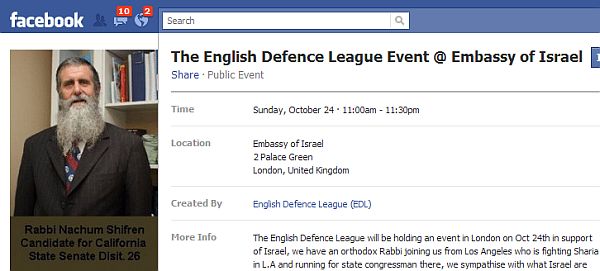

A spokesman at the embassy told me they have nothing to do with the event and will be issuing a statement shortly.*

Lastly, back on Geller, the New York Times made no reference to her possible connections with organized crime.

In 2007, the New York Post reported on a murder that took place at a Long Island auto dealership where Geller was reported to be a co-owner. A car salesman, Collin Thomas, had been murdered outside the showroom of Universal Auto World. In the course of the investigation, detectives also uncovered evidence of an alleged million dollar scam.

As part of the homicide probe, Nassau County police raided the dealership, owned by auto czar Michael Oshry [Geller’s former husband], and Oshry’s Hewlett Harbor home and seized business records.

Cops found banking records were sent to the house, though the state requires such files be kept at businesses, according to court papers filed in a civil forfeiture action by the Nassau district attorney.

“The dealership knew what was going on,” an investigator said.

Oshry’s lawyer, William Petrillo, said his client “has not engaged in any criminal activity.”

His ex-wife, Pamela Geller, former associate publisher of the New York Observer and a conservative blogger, burst into tears when told her ex is under criminal investigation.

Although listed in business records as a Universal co-owner, she denied it. “I have nothing to do with this,” Geller said.

Thomas’ fiancée, Cindy Heron, 21, said he was popular and successful. “All his customers loved him,” she said.

Universal shut its doors June 22 and liquidated its assets.

The New York Times does mention:

Ms. Geller got nearly $4 million when the couple divorced in 2007, and when Mr. Oshry died in 2008, there was a $5 million life-insurance policy benefiting her four daughters, said Alex Potruch, Mr. Oshry’s lawyer. She also kept some proceeds from the sale of Mr. Oshry’s $1.8 million house in Hewlett Harbor.

*Update: The Israeli embassy in London issued a brief statement today, Tuesday, saying that it “wishes to disassociate itself from next Sunday’s event, and from any attempts to link Israel to the EDL.”

Facebooktwittermail

Would-be spies should approach Israeli consulates with caution

In June 2006, Elliot Doxer, an employee at an internet company in Boston, sent an email to a foreign consulate. “I am a Jewish American who lives in Boston,” he allegedly wrote. “I know you are always looking for information and I am offering the little I may have.” He also wrote that he wanted “to help our homeland and our war against our enemies.”

Let’s take a wild guess: he was referring to the Jewish homeland and communicating with the Israeli consulate. That’s the assumption made by the Jerusalem Post and just about everyone else — even though court documents only refer to “Country X.”

As the victim of an FBI sting operation, Doxer now faces the prospect of 20 years in jail and a $250,000 fine if convicted.

But here’s the interesting bit. In response to Doxer’s approach, the consulate informed US law enforcement officials and then assisted the FBI with its investigation.

So what’s a would-be spy to do?

Don’t trust your local Israeli consulate?

Don’t ask for compensation?

Make sure you have extremely valuable intelligence?

Acquire Israeli citizenship before you do anything else?

The next Jonathan Pollard might now be reconsidering his options.

Facebooktwittermail

Obama desperate to please Netanyahu

How much is a two-month extension in the West Bank settlement slowdown really worth?

The Obama administration is pursuing this paltry prize as if it was staving off another economic meltdown — even as hundreds of building projects have already been started.

The Los Angeles Times reported:

The U.S. has been wooing Netanyahu for weeks with offers including a squadron of F-35 fighters, support for a long-term Israeli troop presence in a new Palestinian state, and a pledge to veto any anti-Israel resolutions passed by the United Nations Security Council. The U.S. also is offering access to its satellites that could provide early warning of attacks.

To the Palestinians, the White House is pledging support for their position on the exact location of borders for a future state in exchange for a promise to continue negotiating even if Israel refuses to extend the construction moratorium.

Although the Obama administration was expected to eventually give out incentives to keep the negotiations alive, diplomats and other observers say they are surprised that it has offered so much, so early for such a small victory: a commitment by both sides to keep talking.

“From the left to the right, people are saying that the administration is looking desperate,” said Robert Danin, a former U.S. official and an advisor to former British Prime Minister Tony Blair, an envoy to the region for the United Nations, U.S., European Union and Russia.

On Thursday by Ehud Shani, director general of the Israeli Ministry of Defense, signed a contract for 20 F-35 fighter jets.

Making a hint that they will be used to bomb Iran, he described them as being “one of the answers” for dealing with the “problem” of Tehran.

Israel will get the jets at a discount, pay for them with US tax dollars (through recession-proof military aid), while also likely profiting from F-35 production — it has expressed an interest in manufacturing 25% of the wings of the more than 3,000 aircraft Lockheed expects to build.

The jets won’t be delivered until about 2016, but by that point Israel’s war-mongers no doubt feel optimistic that there will be a war-friendly Republican administration in place — though whether GOP control of the White House is necessary to serve Israel’s needs, is highly debatable.

Facebooktwittermail

The rock upon which our nation no longer rests

In a landmark case, the first trial of a former Guantánamo detainee, Judge Lewis A. Kaplan of United States District Court in Manhattan made a ruling that presents a major setback for the Department of Justice. He barred the key witness from testifying because he had been identified and located through torturing the accused, Ahmed Khalfan Ghailani, who was being held in a secret prison by the CIA.

Kaplan explained his decision in this way:

The Court has not reached this conclusion lightly. It is acutely aware of the perilous nature of the world in which we live. But the Constitution is the rock upon which our nation rests. We must follow it not only when it is convenient, but when fear and danger beckon in a different direction. To do less would diminish us and undermine the foundation upon which we stand.

At face value, this sounds like one of those rare feel-good moments in the post 9/11 era when someone who has sworn to uphold the Constitution took that responsibility very seriously.

“… the Constitution is the rock upon which our nation rests.” I imagine Judge Kaplan took satisfaction in crafting that sentence. It’s good.

But just in case anyone might be alarmed that the innocent-until-proven-guilty Ghailani might end up being acquited, the judge was eager to pacify such fears.

[H]is status as an “enemy combatant” probably would permit his detention as something akin to a prisoner of war until hostilities between the United States and Al Qaeda and the Taliban end even if he were found not guilty in this case.

So is Ghailani on trial to determine his innocence or guilt, or simply to decide on the location of his prison cell?

Isn’t that the direction in which fear and danger beckon?

Facebooktwittermail

Washington Post calls for escalation of the war in Pakistan

After three Frontier Corps soldiers were killed in a NATO helicopter attack on a Pakistani border post last week, the Pakistani government cut off supplies to Afghanistan by closing the Torkham border crossing. It was the easiest way of sending a message to Washington that killing Pakistani soldiers is unacceptable.

The Washington Post‘s editorial page now shoots back: “[Pakistan’s] resistance to a more muscular U.S. campaign in North Waziristan, where the Haqqani faction is based, is unacceptable.”

So what’s the Obama administration going to do? Show the Pakistanis who’s the boss and threaten to cut off aid to a country currently dealing with an environmental catastrophe worse than the 2004 Asian Tsunami?

For those with an imperial mindset (like the editors of the Washington Post) the issue here is about who has the right and the power to exercise their will. America, land of the righteous, savior of the world, must prevail.

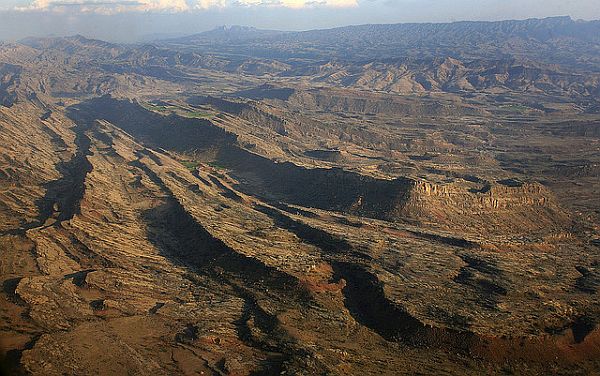
But America’s real military problem is not it’s inability to restore a global consensus about the supremacy of its military might. America’s problem is topography.

It’s because of topography that “Pakistan has a veto over President Barack Obama’s military strategy in Afghanistan.”

It’s because of topography that the border between Pakistan and Afghanistan is a contrivance that the Taliban can freely use to their advantage.

Though thanks to Vietnam’s jungles, quagmire remains the metaphor of choice when we talk about unwinnable wars, a more appropriate metaphor for what is now glibly referred to as Af-Pak is The Labyrinth.

When the Pentagon saw it’s opportunity to vanquish the ghost of Vietnam, it knew what it was looking for: a great big cumbersome army in a wide open space.

Victory against Saddam in Kuwait was a foregone conclusion — even if it’s debatable exactly what the US proved when it demonstrated its ability to slaughter thousands.

The Washington Post now sees itself as a valiant bugler leading the charge in the next phase of what it swiftly, justifiably but also cynically dubbed “Obama’s war”. But like all the war’s proponent, it is a victim of an irresistible illusion: that will-power can move mountains. Others have tried — and the mountains are still there.

What will be accomplished by the latest call for what is euphemistically described as a more “muscular” approach in Waziristan is the further reinforcement of a view of America already widely held in Pakistan.

As Mosharraf Zaidi points out:

There is no ideological commitment or religious fervor that fuels the Pakistani public’s anti-Americanism. Nor is there a particularly civilizational flavor to it. Pakistani anti-Americanism comes from a sustained narrative in which Pakistan is the undignified and humiliated recipient of U.S. financial support — provided at the expense of Pakistani blood.

As narratives go, this comes closer to the truth than its comic-book counterpart: the war of necessity (in which Obama heads in deeper on his search for the way out).

Facebooktwittermail

The terrorist threat to rational thinking

Is the word “terrorism” a secret terrorist weapon?

It appears that when US government officials try to think about terrorism their brains stop working. It’s a word that has become a piece of neural malware and everywhere it spreads, rational minds sputter and then cease to function. Who could have dreamed that a simple word could be so potent and destructive.

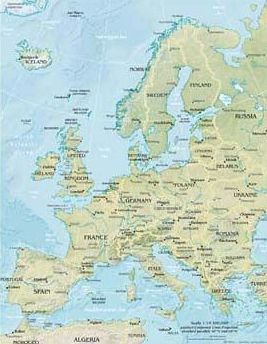
Yesterday we were told this: “The State Department alerts U.S. citizens to the potential for terrorist attacks in Europe.”

Why were they so specific, limiting the warning to just one continent?

The State website usefully provides a map, just in case anyone isn’t sure where Europe is. Should Americans already there jump on the first plane to head home? Apparently not.


“U.S. citizens should take every precaution to be aware of their surroundings and to adopt appropriate safety measures to protect themselves when traveling.”

This might prevent a few road fatalities. Drivers in Europe do expect pedestrians to exercise caution in the vicinity of fast-moving traffic. It’s always a good idea not to step off the curb with your eyes shut.

The New York Times thought it would be good to get some expert opinion on the significance of the State travel alert. Georgetown University’s Bruce Hoffman said: “I’m not sure what it says, beyond the fact that the world’s a dangerous place, and we already knew that.” Indeed.

As to who prompted this response to the latest al Qaeda threat:

A White House spokesman, Nicholas S. Shapiro, said that while the State Department had decided to issue the alert, it came in response to Mr. Obama’s insistence that “we need to do everything possible to disrupt this plot and protect the American people.”

Now here’s the serious point.

In terms of being able to identify where the next major act of terrorism may strike, the US government can’t be any more precise than to specify a continent — and with that level of precision who’s to say whether they identified the right continent.

At the same time, when it comes to identifying from where the next major act of terrorism will emanate, the US government claims it can identify targets with pinpoint accuracy as it escalates drone warfare in Pakistan.

Perhaps it’s not surprising that those who see danger everywhere also claim they have a talent for shooting straight.

There was a time — and it’s really not that long ago — that terrorism provoked a sturdier response from politicians who recognized that it was not their job to become agents of mass hysteria.

On October 12, 1984, Britain’s prime minister, Margaret Thatcher, survived an assassination attempt by the IRA. Five were killed and 31 injured in the blast which occurred at 2.54AM. Just over an hour later, having dusted herself off and changed her clothes, Thatcher spoke to the press.

“Life must go on as usual,” she said and went on to speak at the Conservative Party Conference which continued on schedule.

The event was recalled in Andrew Marr’s History of Modern Britain*:

The IRA responded with equal clarity:

Mrs. Thatcher will now realise that Britain cannot occupy our country and torture our prisoners and shoot our people in their own streets and get away with it. Today we were unlucky, but remember we only have to be lucky once. You will have to be lucky always. Give Ireland peace and there will be no more war.

The Provisional IRA’s bombing campaign continued until 1997.

Thatcher may have lacked the political flexibility and imagination required for the peace process, but she and the people of Northern Ireland and Britain demonstrated that life can indeed go on as usual even during a decades-long bombing campaign.

President Obama on the other hand seems willing to try and perpetuate the illusion that rests as the foundation of the war on terrorism: the idea that terrorism can be thwarted. It cannot.

The opportunities for individuals or small groups of individuals to cause carnage are infinite. The means to prevent such acts of violence are limited.

Political courage demands the articulation of this truth: the issue is not how you stop the unstoppable, but what you do afterwards.

Terrorism can provoke either intelligent or stupid responses and nothing is more stupid than an approach to counterterrorism which ends up fueling further acts of random violence.

Is the world safer now than it was on September 12, 2001? Obviously not.

The fact that 9/11 was followed by a decade of war with no end in sight is the grossest act of stupidity in modern history. Through its misconceived approach to counterterrorism America has rewarded al Qaeda more generously than Osama bin Laden could have ever dreamed.

*Marr’s entertaining BBC documentary series covers British history from the end of the Second World War onwards. The context for the clip above was Thatcher’s ruthless campaign against the National Union of Miners led by Arthur Scargill, but more broadly an effort to destroy the trade union movement and dismantle the welfare state. In the process, she deservedly became the most despised woman in Britain.

Facebooktwittermail

Stuxnet, Bushehr and Siemens WinCC software

Ben D, a commenter at this site and Arms Control Wonk is skeptical about my assertion that Siemens SCADA software is being used at Iran’s Bushehr nuclear facility. I based that claim on a UPI photograph that led the German industrial security expert, Ralph Langner, to speculate that Bushehr was the intended target of the Stuxnet malware.

These are Ben’s qualms:

Concerning the UPI image of a control panel with a MS look window superimposed that says.. “WinCC Runtime License: Your software license has expired. Please obtain a valid license”, well it doesn’t prove a thing.

First of all, the WinCC window could so easily be a photo- shopped overlay on the image of a process control panel.

Secondly, the Control Panel image is typical of process control panels everywhere and even if the WinCC window was not photo-shopped, what has that got to do with Bushehr. There is nothing else in the image to provide any information whatsoever about the local environment to provide any context as to its locality or purpose.

Thirdly, UPI does not provide a source for anyone claiming that the UPI Photo by Mohammad Kheirkhah is actually Bushehr, they just provide a narrative to imply that it is.

Fourthly, Ralph Lagner is not claiming the UPI image is actually genuine or that it is of Bushehr, he merely prefaces his speculative theory with ” If the picture is authentic, which I have no means of verifying,….”.

Has the image been doctored? I’m not in a position to determine that, but the Hacker Factor Blog did some image analysis and concluded that it was not doctored. He has other reasons for questioning whether it was taken at Bushehr but found no evidence that it had been manipulated with Photoshop.

This image apparently confirms that the photograph is of a computer monitor and the continuity in the ripple pattern across the part of the screen where the WinCC message appears seems to confirm that this was not inserted from a different screen image. (This ripple pattern can be seen both in the blue image and the close-up image.)

So, assuming that the WinCC expired-licence message was actually appearing on that monitor screen, is there any evidence that the monitor and the control system it depicts is in Bushehr?

Frankly, I was willing to accept that UPI was not misrepresenting or incorrectly labeling its photos, but still, some additional analysis was both in order and turned out to be fruitful. There is indeed evidence that this image depicts a Bushehr control system.

The elements in the schematic have a uniform numbering system — UA04B001, UA04B002 etc.

Another UPI photograph appears to show the physical components depicted on the system control monitor. This vessel shown on the right is numbered UA06B002. That particular number doesn’t appear on the monitor image but it’s hard to believe that this is not part of the same system.

OK. But maybe the screen image and the image of an Iranian technician turning a valve were taken some place other than Bushehr.

Well, UPI’s photographer was one among a group of international journalists who were shown around Bushehr in February 2009. They included Jon Leyne, a reporter for the BBC, and a video in his report shows the same assembly of pale gray vessels that appear in the UPI photo. Indeed, an AFP image in the same report shows the same technician, from a different angle, doing his valve-turning performance for the assembled press.

With the evidence that I’ve laid out I will assert with even more confidence that the Bushehr nuclear plant uses Siemens WinCC SCADA software. I also see little reason to doubt that Iranian officials were telling the truth when they said that Stuxnet had been found on personal computers used by the facility’s operators. What I remain skeptical about is their claim that the malware did not penetrate the system. How confident the Iranians are on that question may become evident in the coming months when the plant begins or fails to begin generating electricity.

Facebooktwittermail

The Israeli threat to global security

A USB memory stick carrying the Stuxnet malware is believed to have provided intruders with access to Iran’s nuclear program. The same technique was used in November 2008 to break into CENTCOM, providing a foreign government with unfiltered access to the Pentagon’s command of the wars in Iraq and Afghanistan. Did both attacks come from the same source?

Earlier this week, Reuters reported:

Cyber warfare has quietly grown into a central pillar of Israel’s strategic planning, with a new military intelligence unit set up to incorporate high-tech hacking tactics, Israeli security sources said on Tuesday.

Israel’s pursuit of options for sabotaging the core computers of foes like Iran, along with mechanisms to protect its own sensitive systems, were unveiled last year by the military intelligence chief, Major-General Amos Yadlin.

The government of Prime Minister Benjamin Netanyahu has since set cyber warfare as a national priority, “up there with missile shields and preparing the homefront to withstand a future missile war”, a senior source said on condition of anonymity.

Back in 1997, when the US did not overtly support political assassinations, President Clinton intervened to save the life of Khalid Meshaal. The Hamas political bureau chief had been poisoned by Mossad operatives (carrying stolen Canadian passports) on the streets of Jordan’s capital, Amman.

Clinton wasn’t trying to help Hamas but knew that a peace treaty he had helped broker between Israel and Jordan would be in jeopardy if Prime Minister Netanyahu thought he could disregard the sovereignty of Jordan and carry out assassinations with impunity. Likewise, neither King Hussein nor the Canadian government believed that Israeli actions showing a flagrant disregard for the authority of their respective governments could go unanswered.

Netanyahu would probably have found Clinton’s pressure unpersuasive were it not for the fact that the Israeli operatives had already been arrested. In exchange for their release, the Israelis supplied the antidote that saved Meshaal’s life while also releasing the Hamas spiritual leader Sheikh Ahmed Yassin.

Then came 9/11.

Before long, Yassin had been assassinated, the US was using Israeli methods of torture in its campaign against an amorphous Islamic threat, Israel’s own war crimes were sanctioned by the US in the name of the war on terrorism, and the use of stolen foreign passports by Mossad agents committing murder on foreign soil provoked nothing more than a diplomatic slap on the wrists.

When suspected Israeli agents were reported this week to be conducting surveillance on the NSA in Utah, the national security breach did not provoke a murmur in the national media — even though a string of similar incidents prior to 9/11 raised questions about whether Israel could have had foreknowledge of the attacks.

The willingness of this and the previous administration to allow Israel to disregard international law shows that even if the Israel lobby can no longer flourish like a night flower, its power is barely diminished. Even so, the appearance of the Stuxnet malware should be a wake-up call to every government around the world that refuses to place Israel’s national interests above its own.

In its conception, Stuxnet can be viewed very much like a targeted killing — but one designed to attack silently and leave no trace of its origin.

It’s creators understood that they had designed an exceedingly dangerous weapon and so they made sure its damage could be contained. But it seems not to have worked according to plan and so caution got tossed out of the window. Apparently, Israel did what it has done so many times before: pursued what it regarded as its own interests with an utter disregard for the international consequences.

Computerworld reports:

The original infection method, which relied on infected USB drives, included a counter that limited the spread to just three PCs, said [Liam] O Murchu [operations manager with Symantec’s security response]. “It’s clear that the attackers did not want Stuxnet to spread very far,” he said. “They wanted it to remain close to the original infection point.”

O Murchu’s research also found a 21-day propagation window; in other words, the worm would migrate to other machines in a network only for three weeks before calling it quits.

Those anti-propagation measures notwithstanding, Stuxnet has spread widely. Why?

Kaspersky’s [Roel] Schouwenberg [a senior antivirus researcher] believes it’s because the initial attack, which relied on infected USB drives, failed to do what Stuxnet’s makers wanted.

“My guess is that the first variant didn’t achieve its target,” said Schouwenberg, referring to the worm’s 2009 version that lacked the more aggressive propagation mechanisms, including multiple Windows zero-day vulnerabilities. “So they went on to create a more sophisticated version to reach their target.”

That more complex edition, which O Murchu said was developed in March of this year, was the one that “got all the attention,” according to Schouwenberg. But the earlier edition had already been at work for months by then — and even longer before a little-known antivirus vendor from Belarus first found it in June. “The first version didn’t spread enough, and so Stuxnet’s creators took a gamble, and abandoned the idea of making it stealthy,” said Schouwenberg.

In Schouwenberg’s theory, Stuxnet’s developers realized their first attempt had failed to penetrate the intended target or targets, and rather than simply repeat the attack, decided to raise the ante.

“They spent a lot of time and money on Stuxnet,” Schouwenberg said. “They could try again [with the USB-only vector] and maybe fail again, or they could take the risk of it spreading by adding more functionality to the worm.”

O Murchu agreed that it was possible the worm’s creators had failed to infect, and thus gain control, of the industrial systems running at their objective(s), but said the code itself didn’t provide clear clues.

What is clear, O Murchu said in a news conference Friday morning, is that Stuxnet evolved over time, adding new ways to spread on networks in the hope of finding specific PLCs (programming logic control) hardware to hijack. “It’s possible that [the attackers] didn’t manage to get to all of their targets [with the earlier version],” O Murchu said. “The increased sophistication of Stuxnet in 2010 may indicate that they had not reached their target.”

With the proliferation of Stuxnet, Schouwenberg said that the country or countries that created the worm may have themselves been impacted by its spread. But that was likely a calculated risk the worm’s developers gladly took.

And that risk may have been quite small. “Perhaps they knew that their own critical infrastructure wouldn’t be affected by Stuxnet because it’s not using Siemens PLCs,” Schouwenberg said.

The danger now posed by Stuxnet is not simply through its direct proliferation but by virtue of the fact that it provides a blueprint that can be adapted by other parties who would otherwise lack the resources to create malware this sophisticated from scratch.

What might have been conceived as a tool to prevent the creation of a weapon of mass destruction could itself be turned into a WMD.

The Washington Post reports:

“Stuxnet opened Pandora’s box,” said Ralph Langner, a German researcher whose early analysis of the worm’s ability to target control systems raised public awareness of the threat. “We don’t need to be concerned about Stuxnet, but about the next-generation malware we will see after Stuxnet.”

Sean McGurk, director of the U.S. National Cybersecurity and Communications Integration Center at the Department of Homeland Security, said that the department posted its first report to industry recommending steps to mitigate the effects of Stuxnet on July 15. But “not even two days later,” he said, a hacker Web site posted the code so that others could use it to exploit the vulnerabilities in Microsoft.

“So we know that once the information is out in the wild, people are taking it and they’re modifying it,” he said.

In other words, what started as an Israeli cyber attack on nuclear installations in Iran could end up crashing the US powergrid or causing havoc anywhere else on the globe.

Even before Stuxnet loomed over the horizon, serious warnings were being issued about the United States’ vulnerability to a crippling cyber attack, yet thus far none of those raising the alarm have pointed to the ways in which Israel’s cyber warfare capabilities may now indirectly or directly threaten the United States and its interests.

– – –

Late last year, 60 Minutes reported on America’s vulnerability to a major cyber attack.

Facebooktwittermail

Israel: smart enough to create Stuxnet and stupid enough to use it

Ever since speculation began, suggesting that Israel is the source of the Stuxnet malware, there has been a buzz of excitement in the Zionist corner of the blogosphere. The DEBKAfile — trusted source for pro-Israel fantasists all over the world — declared that if it turns out that millions of Iranian industrial units have been hit, “this cyber weapon attack on Iran would be the greatest ever.”

Glee at such a prospect is not shared by observers who lack the Zionist pathological obsession with Iran.

Stephen Spoonamore, a veteran cybersecurity consultant interviewed by NPR said: “I can think of very few stupider blowback decisions” than to release code that controls most of the worlds’ hydroelectric dams or many of the world’s nuclear plants or many of the world’s electrical switching stations.

The fallout from Stuxnet is clearly going global.

AFP now reports:

The Stuxnet computer worm has wreaked havoc in China, infecting millions of computers around the country, state media reported this week.

Stuxnet is feared by experts around the globe as it can break into computers that control machinery at the heart of industry, allowing an attacker to assume control of critical systems like pumps, motors, alarms and valves.

It could, technically, make factory boilers explode, destroy gas pipelines or even cause a nuclear plant to malfunction.

The virus targets control systems made by German industrial giant Siemens commonly used to manage water supplies, oil rigs, power plants and other industrial facilities.

“This malware is specially designed to sabotage plants and damage industrial systems, instead of stealing personal data,” an engineer surnamed Wang at antivirus service provider Rising International Software told the Global Times.

“Once Stuxnet successfully penetrates factory computers in China, those industries may collapse, which would damage China’s national security,” he added.

Another unnamed expert at Rising International said the attacks had so far infected more than six million individual accounts and nearly 1,000 corporate accounts around the country, the official Xinhua news agency reported.

Jeffrey Carr, author of “Inside Cyber Warfare,” describes what he believes is the first example of Stuxnet’s destructive power: the loss of India’s INSAT-4B communications satellite which shut down in July. The satellite’s control systems use Siemens S7-400 PLC and SIMATIC WinCC software, both of which are targeted by Stuxnet.

If speculation that Stuxnet was created by Israel has been driven by the circumstantial evidence that Israel’s nemesis Iran appears to have been the primary target, there is now some subtle but concrete evidence again pointing in Israel’s direction.

Computerworld reports:

Buried in Stuxnet’s code is a marker with the digits “19790509” that the researchers believe is a “do-not infect” indicator. If the marker equals that value, Stuxnet stops in its tracks, and does not infect the targeted PC.

The researchers — Nicolas Falliere, Liam O Murchu and Eric Chen — speculated that the marker represents a date: May 9, 1979.

“While on May 9, 1979, a variety of historical events occurred, according to Wikipedia “Habib Elghanian was executed by a firing squad in Tehran sending shock waves through the closely knit Iranian Jewish community,” the researchers wrote.

Elghanian, a prominent Jewish-Iranian businessman, was charged with spying for Israel by the then-new revolutionary government of Iran, and executed May 9, 1979.

Earlier, the New York Times reported:

Deep inside the computer worm that some specialists suspect is aimed at slowing Iran’s race for a nuclear weapon lies what could be a fleeting reference to the Book of Esther, the Old Testament tale in which the Jews pre-empt a Persian plot to destroy them.

That use of the word “Myrtus” — which can be read as an allusion to Esther — to name a file inside the code is one of several murky clues that have emerged as computer experts try to trace the origin and purpose of the rogue Stuxnet program, which seeks out a specific kind of command module for industrial equipment.

Not surprisingly, the Israelis are not saying whether Stuxnet has any connection to the secretive cyberwar unit it has built inside Israel’s intelligence service. Nor is the Obama administration, which while talking about cyberdefenses has also rapidly ramped up a broad covert program, inherited from the Bush administration, to undermine Iran’s nuclear program. In interviews in several countries, experts in both cyberwar and nuclear enrichment technology say the Stuxnet mystery may never be solved.

There are many competing explanations for myrtus, which could simply signify myrtle, a plant important to many cultures in the region. But some security experts see the reference as a signature allusion to Esther, a clear warning in a mounting technological and psychological battle as Israel and its allies try to breach Tehran’s most heavily guarded project. Others doubt the Israelis were involved and say the word could have been inserted as deliberate misinformation, to implicate Israel.

The same report cites Shai Blitzblau, the technical director and head of the computer warfare laboratory at Maglan, an Israeli company specializing in information security, who said he was “convinced that Israel had nothing to do with Stuxnet.”

“We did a complete simulation of it and we sliced the code to its deepest level,” he said. “We have studied its protocols and functionality. Our two main suspects for this are high-level industrial espionage against Siemens and a kind of academic experiment.”

Did Blitzblau present his findings at this week’s VB Conference in Vancouver where Stuxnet was the focus of attention? No — which is not surprising given his vacuous claim to have studied the code at its deepest level while other experts say it will take months to penetrate the thousands of lines of code contained in a 500kB piece of software.

As for why Israeli programmers would have inserted clues about about authorship deep inside the malware, the most obvious explanation would be the most prosaic: pride.

Even when the utmost secrecy is called for, there are those who cannot resist the temptation to leave their mark.

As for the significance of another finding — June 24, 2012 is the “kill date” after which the worm will refuse to execute — again, we can only speculate.

Is this the cut-off point for Israel’s campaign of cyber warfare against Iran after which will come the time for real war? Right in the run up to the 2012 US presidential election.

Facebooktwittermail

Preemptive strikes or preemptive revenge in Waziristan?

Newsweek reports:

For weeks now, as missiles from American drones have snuffed out their leaders and terrorized their recruits in the remote mountains of Pakistan’s North Waziristan area, Al Qaeda fighters have kept their spirits up by telling each other they were about to have their revenge. “It’s like they’ve just been waiting for news, as if they were all excited about something big about to happen in the West,” says an Afghan Taliban intelligence officer known to Newsweek who operates as a liaison between his organization and Al Qaeda. For security reasons he would not allow his name to be published. The source said one senior Qaeda activist told him that Europeans and Americans think “our minds and bodies are in the mountains of the [Pakistan] tribal areas, but soon we will carry out a visible offensive with long-term consequences in their own Western homes and cities.”

Reports out of Britain overnight suggest that more than bravado may be at work here: according to anonymous sources cited by Sky News foreign-affairs editor Tim Marshall, intelligence agencies have uncovered terrorist plans to launch simultaneous commando-style attacks in Germany, France, and Britain that would be reminiscent of the slaughter in Mumbai almost two years ago. Such attacks have been a major concern of Western police forces because they require no special weaponry — just guns, training, and a will to die fighting.

Marshall says that the dramatic increase in drone attacks over the last few weeks is intended to disrupt the plot against European targets. One drone strike reportedly killed the head of Qaeda operations in Afghanistan and Pakistan, known as Shaikh Fateh, just last Saturday. Marshall quoted his sources telling him the Qaeda plot was in an “advanced but not imminent stage” and that intelligence agencies had been tracking the operatives “for some time.” The implication is that the onslaught of drone attacks, especially in the last month, has succeeded in thwarting the plot.

If the plot is not at an imminent stage, one wonders why the Eiffel Tower has been evacuated twice this month. But whether imminent or advanced, the logic behind the response to the threat — escalating drone attacks in Pakistan — ought to hinge on where these Qaeda commando teams are now located.

ABC News reports on intelligence gathered from a suspected German terrorist who is now being held at Bagram airbase near Kabul. “The captured German reportedly said several teams of attackers, all with European passports, had been trained and dispatched from training camps in Waziristan and Pakistan.”

If they’ve already been dispatched, what’s the point of launching drone attacks on these training camps now? Is this about thwarting terrorism or about adopting a combative posture? A way of saying: we’re not doing nothing; we’re doing something. It might not work, but we sure as hell won’t take this lying down.

Or maybe it’s what might be called preemptive retribution — a foretaste of what will happen after a major al Qaeda attack.

As Bob Woodward’s new book reveals, “if a Pakistani-based terrorist ever managed to strike inside the United States, the CIA had a ‘retribution plan’ to strike at least 150 camps in Pakistan.”

Retribution is another name for revenge and the inchoate rationale that drives revenge is the desire to eliminate the enemy.

Who did we get today,” White House chief of staff Rahm Emanuel would ask, as though a finite list of drone targets could be whittled down to zero — even while the director of the CIA warned him that this could go on forever.

Almost a decade after 9/11, the mere fact that a retribution plan with 150 targets could be drawn up, is a clear indication of a failed strategy.

Of course this elimination strategy is doomed because it confuses human bodies with the ideas and sentiments that animate them. The bodies can be destroyed but the spirit moves on to animate another combatant. Indeed, the drone can best be seen as the worst kind of force multiplier — one that invigorates the enemy and boosts support among the local population.

As Stephen Farrell astutely noted after being able to observe the Taliban while he was held captive last year, as much as anything else the significance of the drone is not its destructive power but what it signals: the absence of foreign soldiers.

The US commands the sky over Waziristan because it dare not occupy the land.

As for whether a terrorist attack in France is actually imminent, the raised level of alertness prompted by official warnings has been matched by a raised level of suspicion.

Opposition figures and pundits alike have loudly speculated that the troubling pronouncements are actually a ruse to turn attention away from scandals that have implicated government members and from growing protest against pension reform. French media have even suggested that President Nicolas Sarkozy, whose approval ratings are in the doldrums, has borrowed the tactic of the well-timed terrorism scare from the playbook of former U.S. President George W. Bush.

“The French people aren’t duped,” says Socialist Party official and former presidential candidate Ségolène Royal in a remark typical of the skeptics. “The fight against terrorism is a serious and discreet effort, incompatible with sudden alert announcements — made, by chance, as protests surge. There’s an element of stagecraft in this that’s out of line and even dangerous.”

The lesson of the last decade should be that what governments do to prevent terrorism matter less than what they do afterwards.

Thus far, local horror has been a reliable catalyst for global folly.

Facebooktwittermail

Does every disaster present an American diplomatic opportunity?

Did the Washington Post‘s David Ignatius really travel all the way to Pir Sabak, west of Islamabad in flood-devastated Pakistan, just to ask the villagers there what they think of America?

When I arrived, villagers were erecting a big tent to serve as a mosque — even before they had built a school for their kids. When I asked what they thought about America, they had no criticisms. “We are in a time of need, and we are looking for help from anywhere,” said Mohammed Ali, a white-bearded man who was helping raise the canvas mosque.

The U.S. military has been working hard to provide flood assistance, but most of that is invisible to Pakistanis. They read about American drone attacks but not about helicopters bringing food supplies. That lack of recognition upsets U.S. officials, but they haven’t been able to change it.

On a day’s tour of the northern flood zone, I saw posters for Turkish, British and other European relief groups, but not one sign of American help. That’s a missed opportunity. These people still need help desperately, and they will remember those who visibly provided it.

I guess if USAID takes Ignatius’ message to heart, they might start producing multi-lingual labeling for aid packaging. But as the Post columnist learned, those in desperate need don’t care too much about where the help comes from.

As for what changes perceptions, it’s a shame Ignatius wasn’t in Pir Shabak a month ago during the visit by Baroness Warsi, Britain’s first Muslim minister and Chairwoman of the Conservative Party.

Just imagine if the US government could send a Muslim woman cabinet level official on a diplomatic mission to a Muslim country — or for that matter, on a trip to Florida or Tennessee!

While men like Imam Feisal Rauf are struggling to win acceptance for Muslims within American society, Sayeeda Hussain Warsi can speak confidently as a Muslim feminist and British political leader who exemplifies what it means to create a modern pluralistic society.

Facebooktwittermail

Israel adopts non-violence with tasers and insults to a Holocaust survivor

If many Israelis thought the approach of the Mavi Marmara flotilla looked like an imminent attack by a Turkish armada, a British-flagged catamaran carrying nine Jewish activists on their way to Gaza surely posed no threat to the Jewish state — or did it?

The IDF couldn’t take any chances and so as the Irene approached Gaza early today, Israeli commandos intercepted the latest waterborne menace and took over the boat, thankfully without killing anyone.

“The boarding of the yacht was without incident, and no violence of any kind was used by neither the passengers on board nor the Israel naval forces,” the IDF Spokesperson blog declared.

Haaretz told a somewhat different story:

Israeli activist and former Israel Air Force pilot Yonatan Shapira saying that there were “no words to describe what we went through during the takeover.”

Shapira said the activists, who he said displayed no violence, were met with extreme IDF brutality, adding that the soldiers “just jumped us, and hit us. I was hit with a taser gun.”

“Some of the soldiers treated us atrociously,” Shapira said, adding that he felt there was a “huge gap between what the IDF spokesman is saying happened and what really happened.”

Meanwhile, Yossi Levy, an Israeli foreign ministry spokesman who has been carefully trained in the Avigdor Lieberman school of diplomacy encapsulated the government’s position in a string of insults.

The Foreign Ministry expressed its anger against the Israelis and Jews who took part in the sail. According to a ministry official, “They poured fuel into the bonfire of hatred against Israel worldwide. We don’t expect Israelis to be patriotic, but they should definitely not act as Hamas followers.”

The official criticized former pilot Yonatan Shapira and the Holocaust survivor who took part in the flotilla.

“This former pilot, who has joined the ranks of Hamas and sprays hateful graffiti [“Free Palestine“] on the walls of the Warsaw Ghetto, is not a pilot but an astronaut. A Holocaust survivor who sanctifies the name of the Jews’ murderers and takes time to justify those who don’t accept Israel’s right for sovereignty has probably not learned anything from the terrible past.”

Reuben Moscowitz begged to differ as he expressed disbelief that “Israeli soldiers would treat nine Jews this way. They just hit people.”

“I as a Holocaust survivor cannot live with the fact that the State of Israel is imprisoning an entire people behind fences,” Moscowitz said, adding that “it’s just immoral.”

“What happened to me in the Holocaust wakes me up every night and I hope we don’t do the same thing to our neighbors,” Moscowitz said, adding that he was comparing “what I went through during the Holocaust to what the besieged Palestinian children are going through.”

Facebooktwittermail